
Everything you need to know about visiting Slovenia's most stunning river valley — how to get there, where to stay and where to find the best swimming spots.
The Ultimate Guide to Soča Valley, Slovenia
The Soča Valley is, hands down, one of the best things you can see in Slovenia. It's a valley in the western part of the country that follows the Soča River — a stunningly clear, emerald-green river that flows from the Julian Alps all the way to Italy. Along the way, you get deep gorges, massive waterfalls, charming small towns, and some of the best outdoor activities in Europe.
If you've seen photos of a turquoise river in Slovenia and thought they must be edited — they're not. The Soča River really looks like that. It's often called the most beautiful river in Europe, and once you see it in person, you'll understand why.
Why Visit Soča Valley?
Most people visiting Slovenia for the first time go to Lake Bled and Ljubljana. Both are great, but the Soča Valley is where Slovenia gets really impressive.
This is wilder, more dramatic scenery — think 2,000-metre peaks, narrow canyons, suspension bridges, and water so clear you can see the bottom from way above.
Here's what makes the Soča Valley stand out:
- The Soča River — the centrepiece of the valley. Emerald green, crystal clear, and perfect for rafting, kayaking, swimming, or simply staring at in disbelief.
- Adventure sports — Bovec, the valley's main town, is Slovenia's adventure capital. Rafting, canyoning, paragliding, zip-lining, fly fishing — it's all here.
- Waterfalls and gorges — Kozjak Waterfall, Boka Waterfall (144 metres high), Virje Waterfall, Tolmin Gorge, the Great Soča Gorge. The valley is packed with them.
- World War I history — the Soča Valley was the site of the Isonzo Front, the largest mountain battle in history. The Kobarid Museum is one of the best war museums in Europe.
- Incredible food — Hiša Franko in Kobarid holds three Michelin stars and is on the World's 50 Best Restaurants list. But even the local gostilnas (inns) serve fantastic traditional food.
- Varied landscape — in one hour of driving you go from high alpine scenery to a softer, almost Mediterranean landscape with vineyards and warmer air. Few places in Europe change this dramatically in such a short distance.
The valley was also the first destination in Slovenia to receive the European Destination of Excellence (EDEN) award for sustainable tourism.
And if the scenery looks familiar — the battle scenes in The Chronicles of Narnia: Prince Caspian were filmed here in Bovec.
Where is the Soča Valley?
The Soča Valley is in western Slovenia, right up against the Italian border.
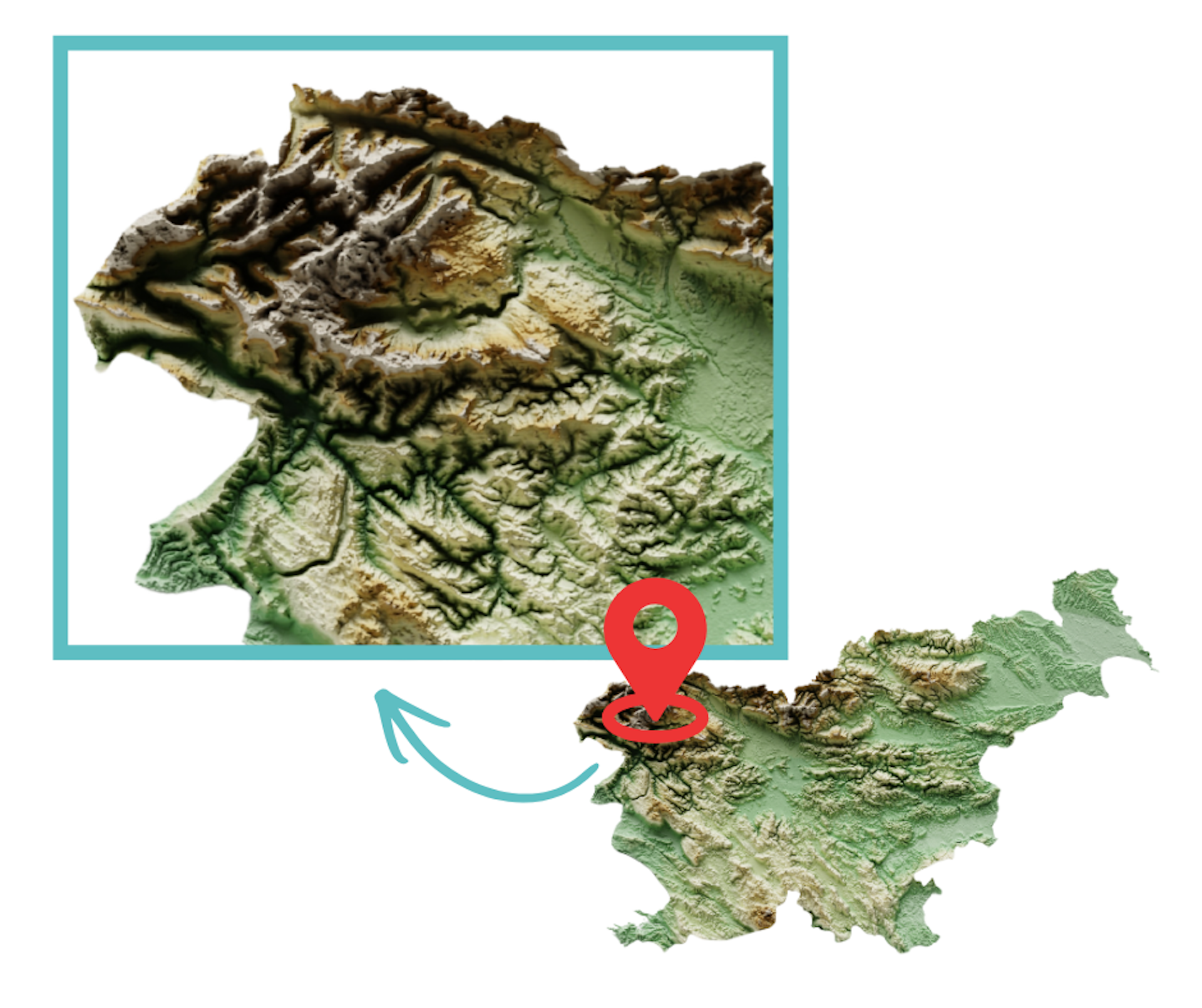
It sits between the Julian Alps to the north and the hills of the Goriška region to the south.
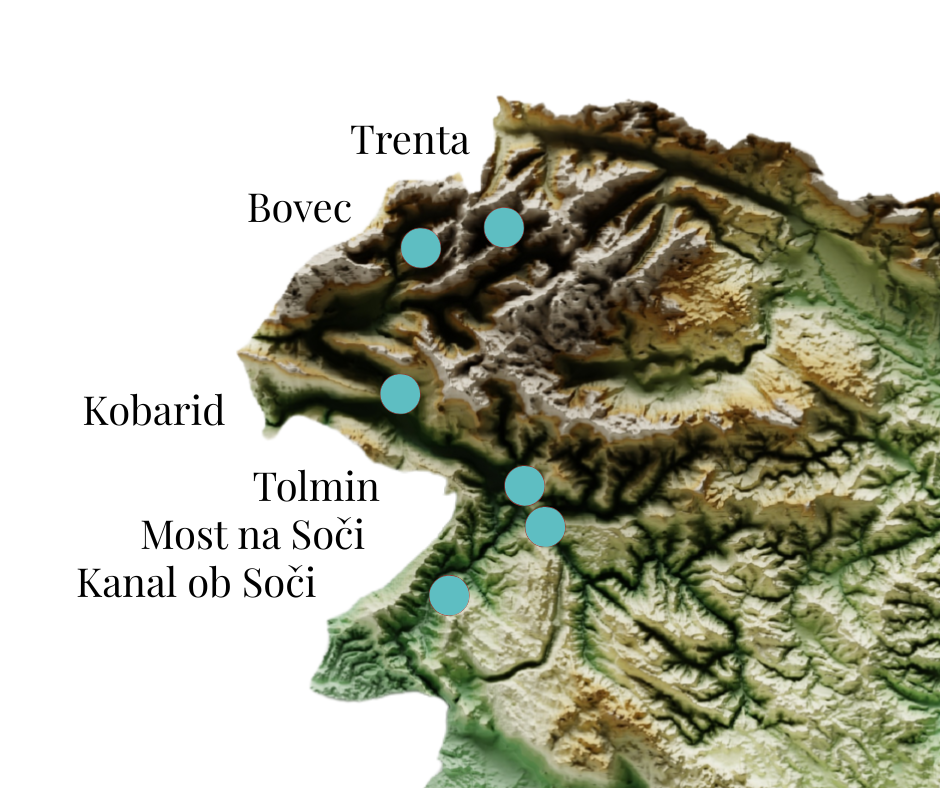
The valley follows the Soča River from its source in Triglav National Park — near the small village of Trenta — all the way down through Bovec, Kobarid, Tolmin, and Kanal ob Soči, before the river crosses into Italy where it's known as the Isonzo.
The valley is roughly 80 kilometres long, and the character of the landscape changes significantly as you move from north to south.
The upper valley around Trenta and Bovec is full-on alpine — towering peaks, narrow gorges, cold water, pine forests.
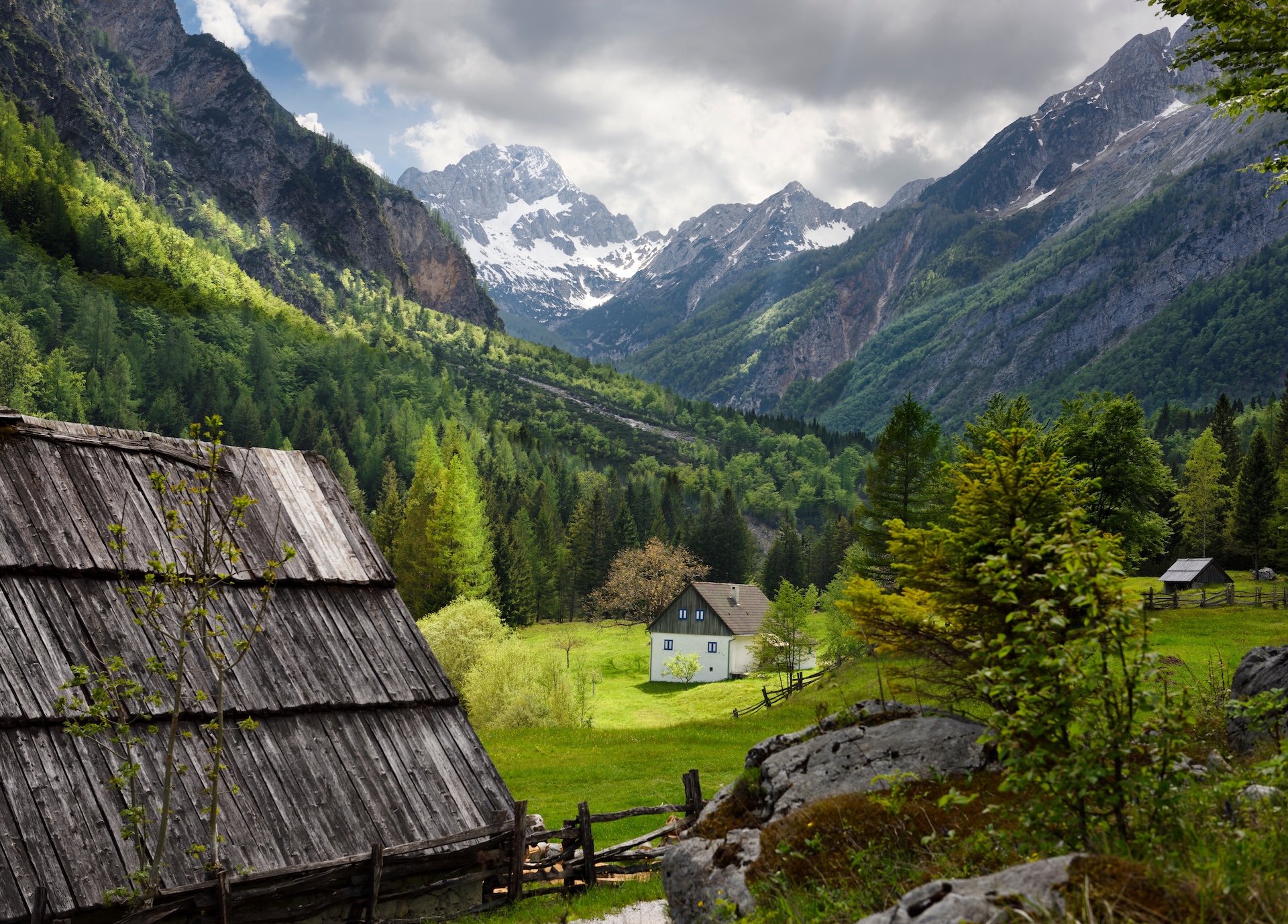
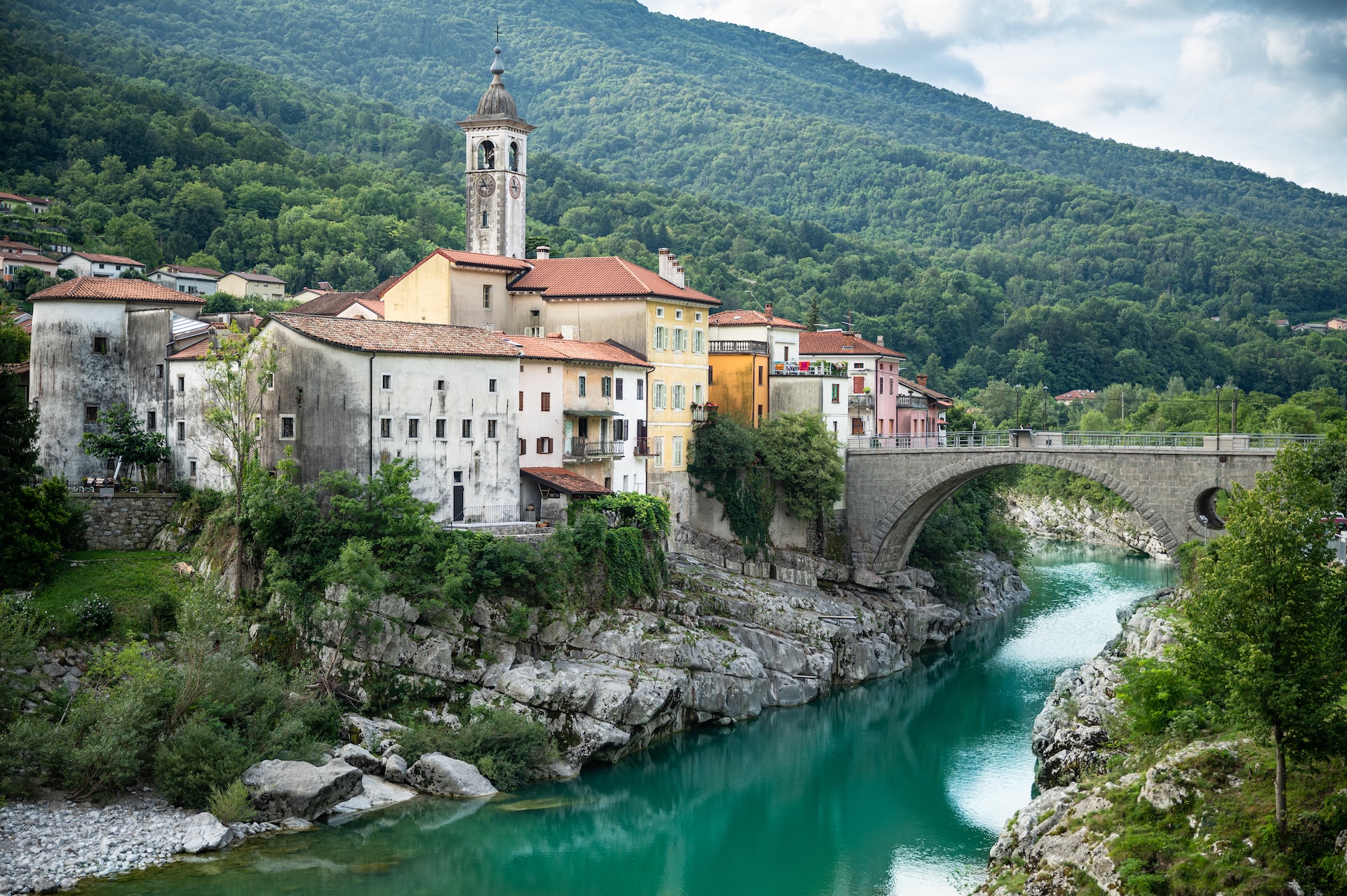
By the time you reach Tolmin and Kanal, things soften up. The air gets warmer, you start seeing vineyards and fruit trees, and there's a noticeable Mediterranean influence in the food, the architecture, and the general pace of life.
The main towns along the valley, from north to south:
- Trenta — a small alpine village at the source of the Soča River, inside Triglav National Park
- Bovec — the biggest town in the upper valley and Slovenia's adventure sports hub
- Kobarid — a charming, historic town known for its WWI museum and fine dining
- Tolmin — the administrative centre of the valley, gateway to Tolmin Gorge, and host of major summer festivals
- Most na Soči — a small town at the confluence of the Soča and Idrijca rivers
- Kanal ob Soči — a photogenic riverside town famous for its iconic stone bridge
How to Get to the Soča Valley
The Soča Valley is easy to reach, but you'll want a car. Public transport exists, but it's limited and won't give you the flexibility to explore the valley properly. Here are the main routes in. From Ljubljana (the most common starting point)
Three main options from Ljubljana:
- Via the Vršič Pass (most scenic)
- Over Predel Pass (fastest)
- Via Nova Gorica (most comfortable)
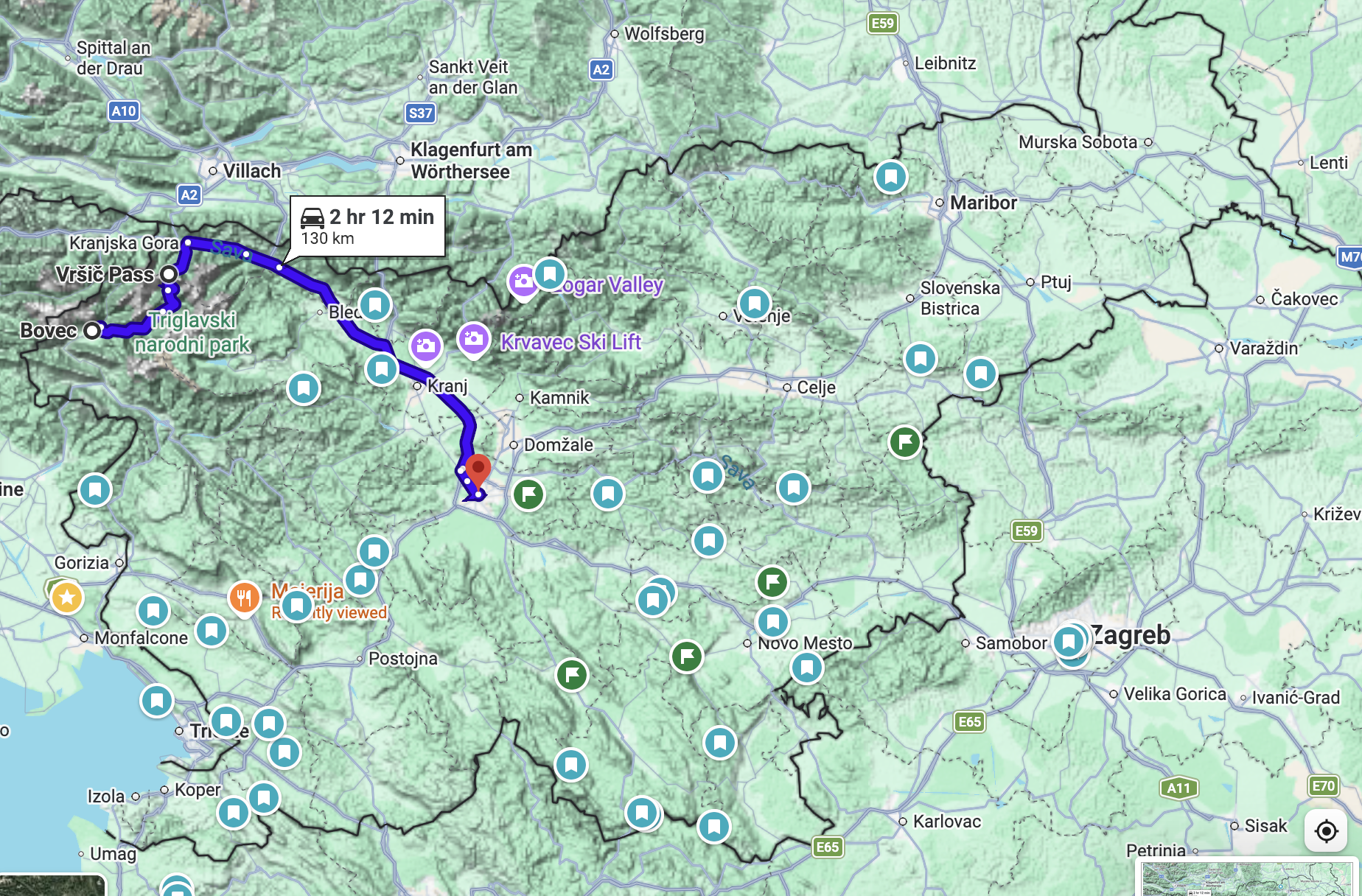
Drive over Vršič pass - the most scenic route
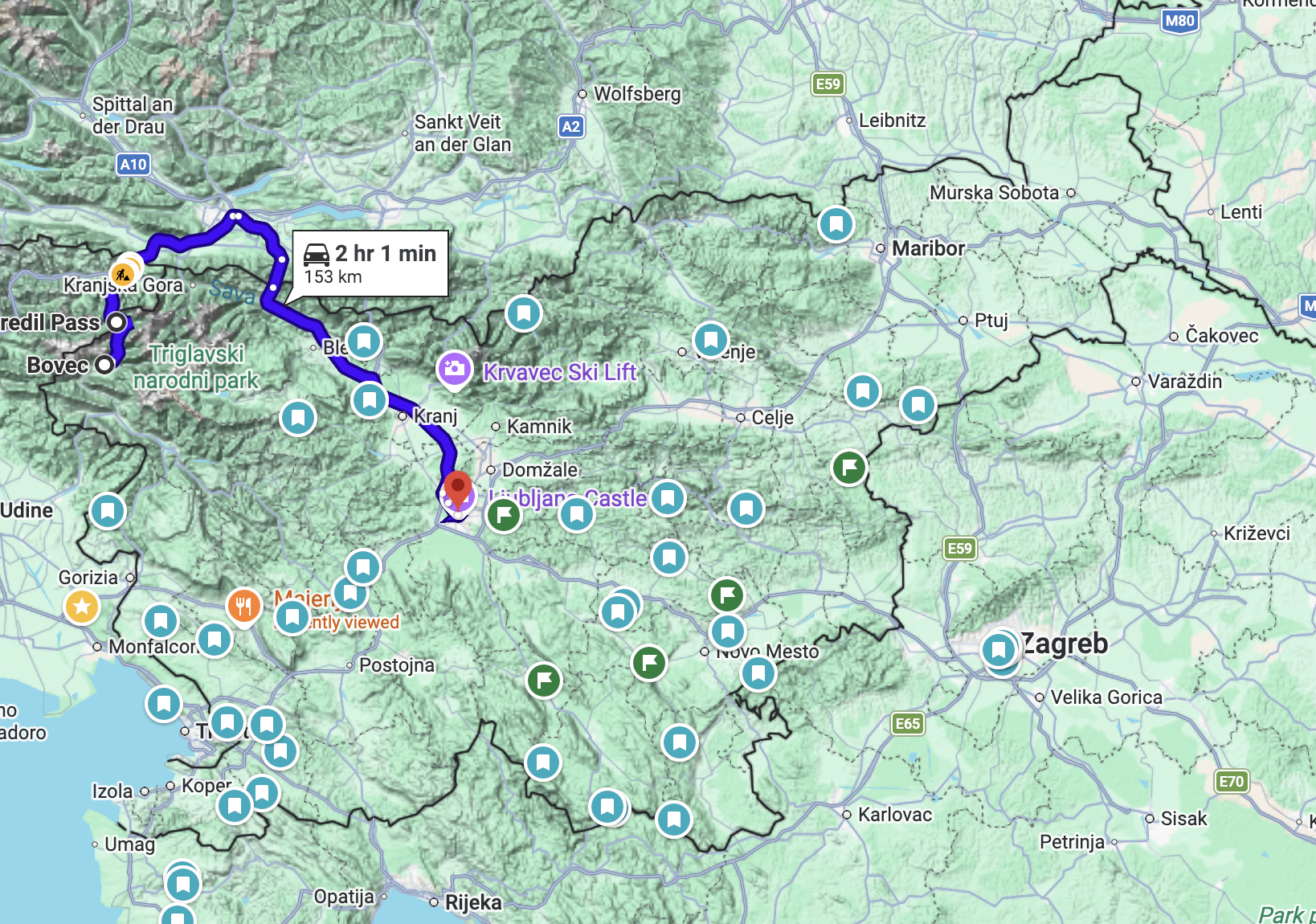
Drive over Predel requires brief crossing of the border into Italy
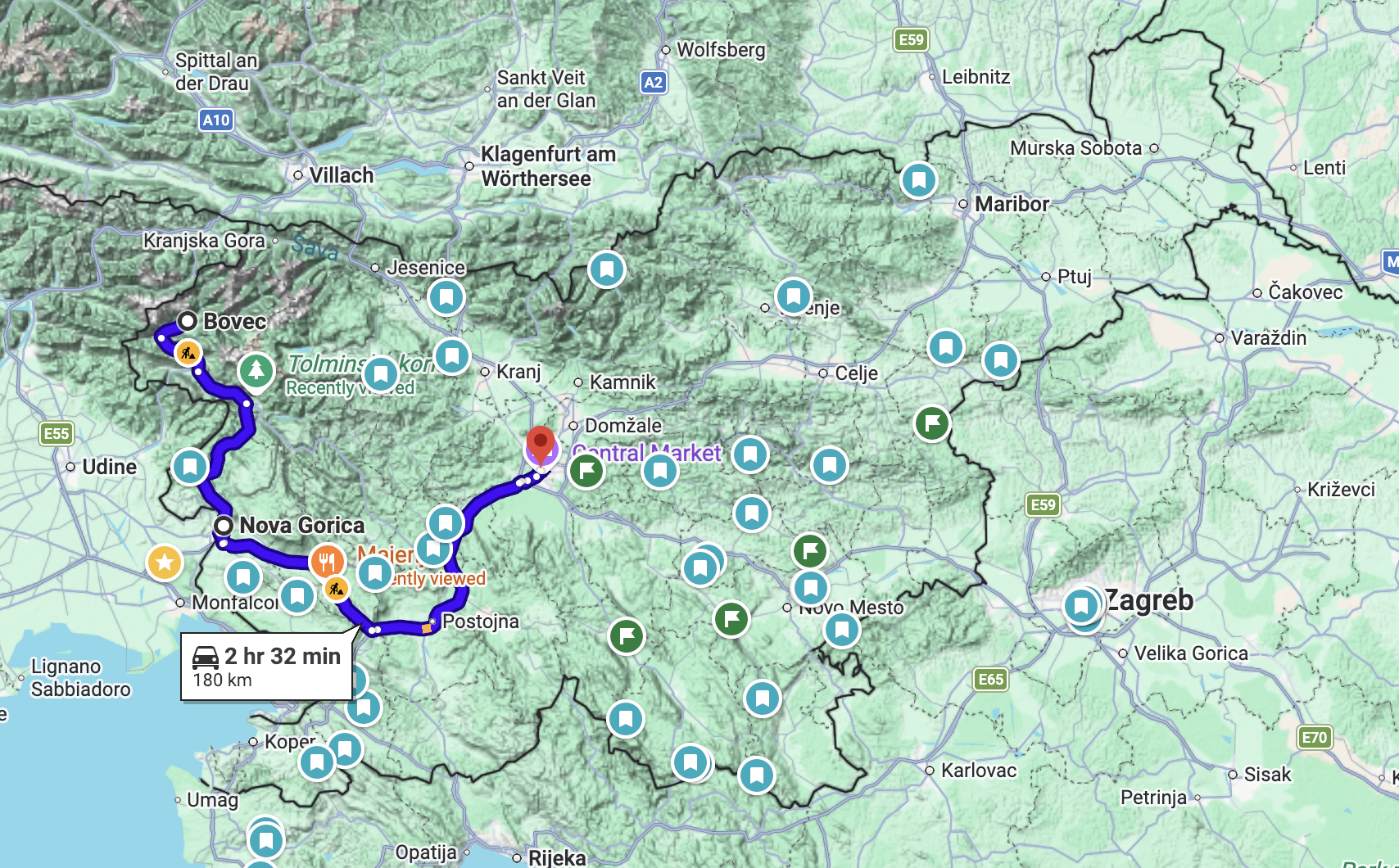
Nova Gorica route is the most comfortable
By car from Ljubljana
There are 2 main driving routes:
1. Via the Vršič Pass (the scenic route)
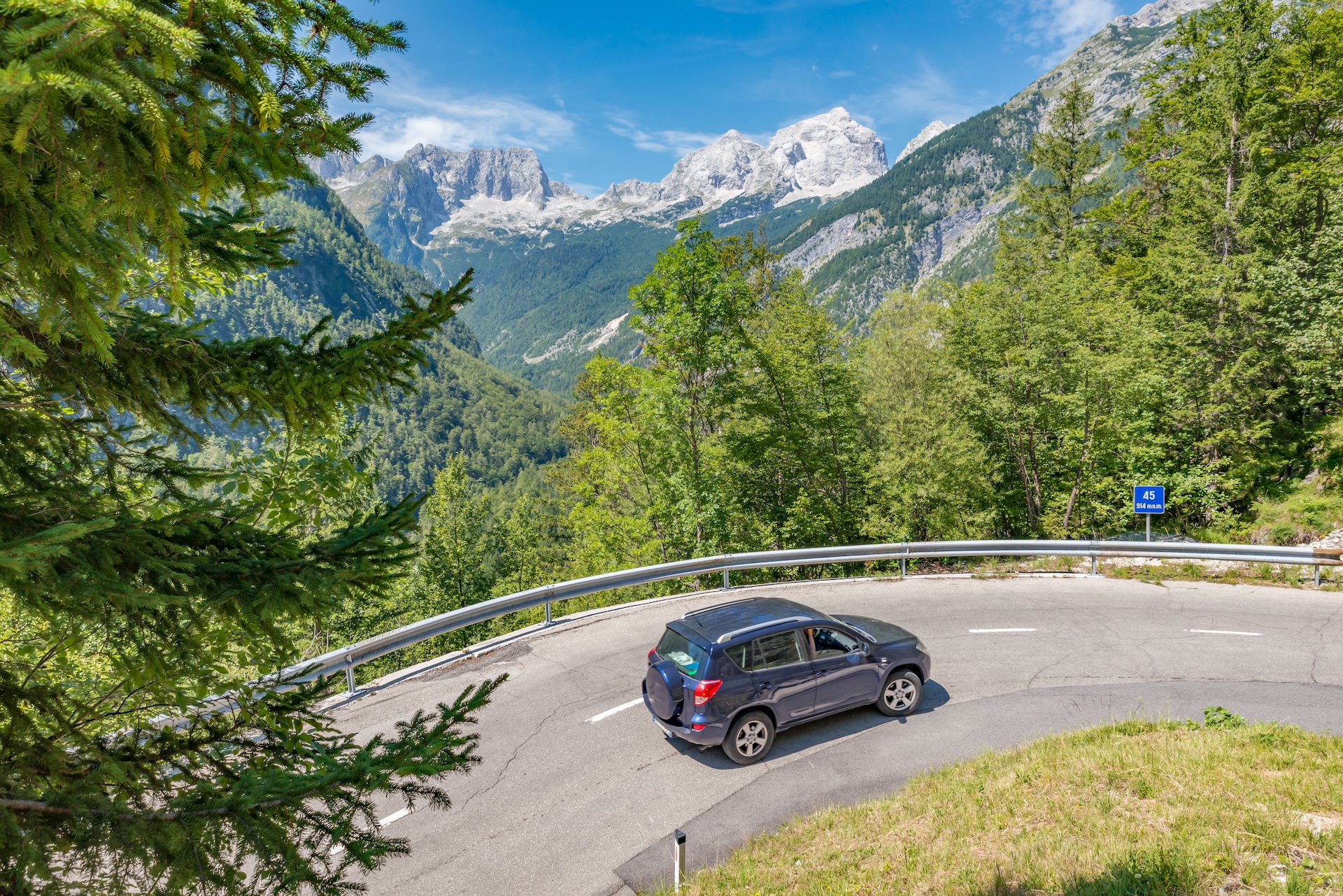
Drive north to Kranjska Gora (about 1 hour), then cross the Vršič Pass into the valley. The pass road has 50 hairpin bends and climbs to 1,611 metres, making it one of the most dramatic drives in Slovenia.
Total drive time: about 2 hours. Important: the Vršič Pass is typically closed from late October to early May due to snow.
2. Via Nova Gorica (the year-round route)
Take the motorway southwest, then turn north towards Tolmin. About 1.5 hours, open all year. You enter the valley from the south.
Note: you'll need an e-vignette (digital toll sticker) for the motorway — you can buy one online at evinjeta.dars.si before your trip.
By bus from Ljubljana
If you don't have a car, buses connect Ljubljana directly to the Soča Valley. The main operator is Nomago.
Here's what to expect:
- Ljubljana → Bovec — roughly 3.5 to 4 hours, around €14. The bus runs via Tolmin and Kobarid, so you can get off at any of the main towns along the way.
- Ljubljana → Kobarid — about 3 hours, around €12–14
- Ljubljana → Tolmin — about 2.5 hours
Outside of summer, direct services may run only once or twice a day, so check the timetable in advance.
During summer (roughly June to September), additional buses are added, including seasonal routes from Kranjska Gora and Bled over the Vršič Pass — which is a spectacular bus ride in itself.
Where to buy the tickets? You can buy them at the bus stops (in Ljubljana, not “bus shops” in Soca valley), online, or best - from the driver directly.
Best Time to Visit the Soča Valley
The Soča Valley is beautiful year-round, but the time of year you visit will shape your experience quite a bit.
Here's a realistic breakdown of what to expect in each season.
Summer (June – September)
This is peak season, and for good reason. The weather is warm (often above 30°C), all roads are open — including the Vršič Pass — and you can do everything the valley has to offer: rafting, kayaking, canyoning, swimming in the river, hiking, paragliding. All restaurants, accommodation, and activity providers are fully operational.
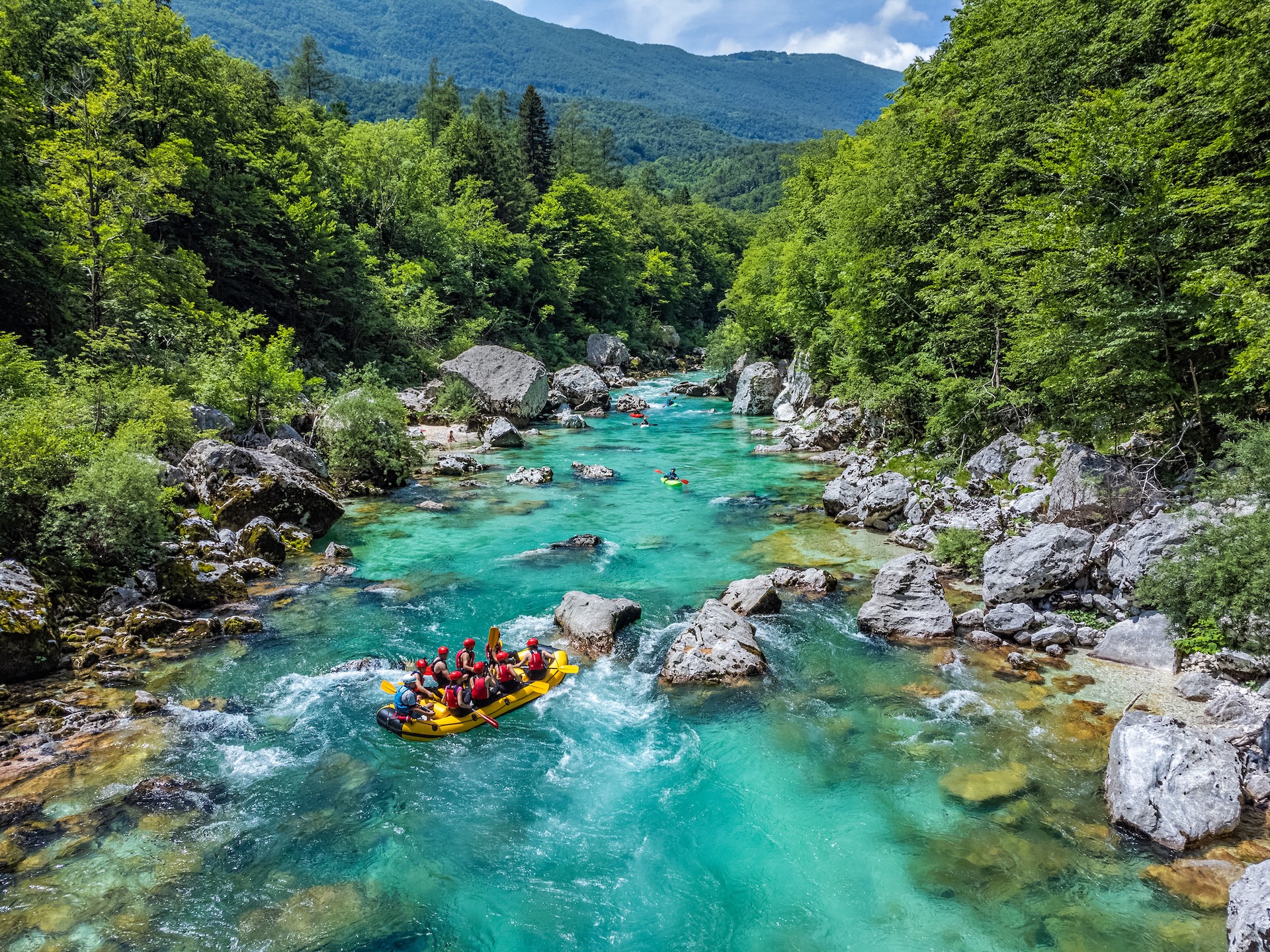
July and August are the busiest months. Popular spots like Kozjak Waterfall, the Great Soča Gorge, and Tolmin Gorge can get crowded, especially on weekends. If you can, visit on weekdays or go early in the morning. Accommodation in Bovec and Kobarid fills up fast in high summer, so book your apartment well in advance.
One thing most guides don't mention: it rains a lot in the Soča Valley, even in summer. The Julian Alps create their own weather, and afternoon thunderstorms are common. Don't let that put you off — the rain usually passes quickly — but always pack a waterproof layer, no matter how sunny the forecast looks.
The most reliable weather service for this part of Slovenia: ilMeteo
Shoulder season (May and October)
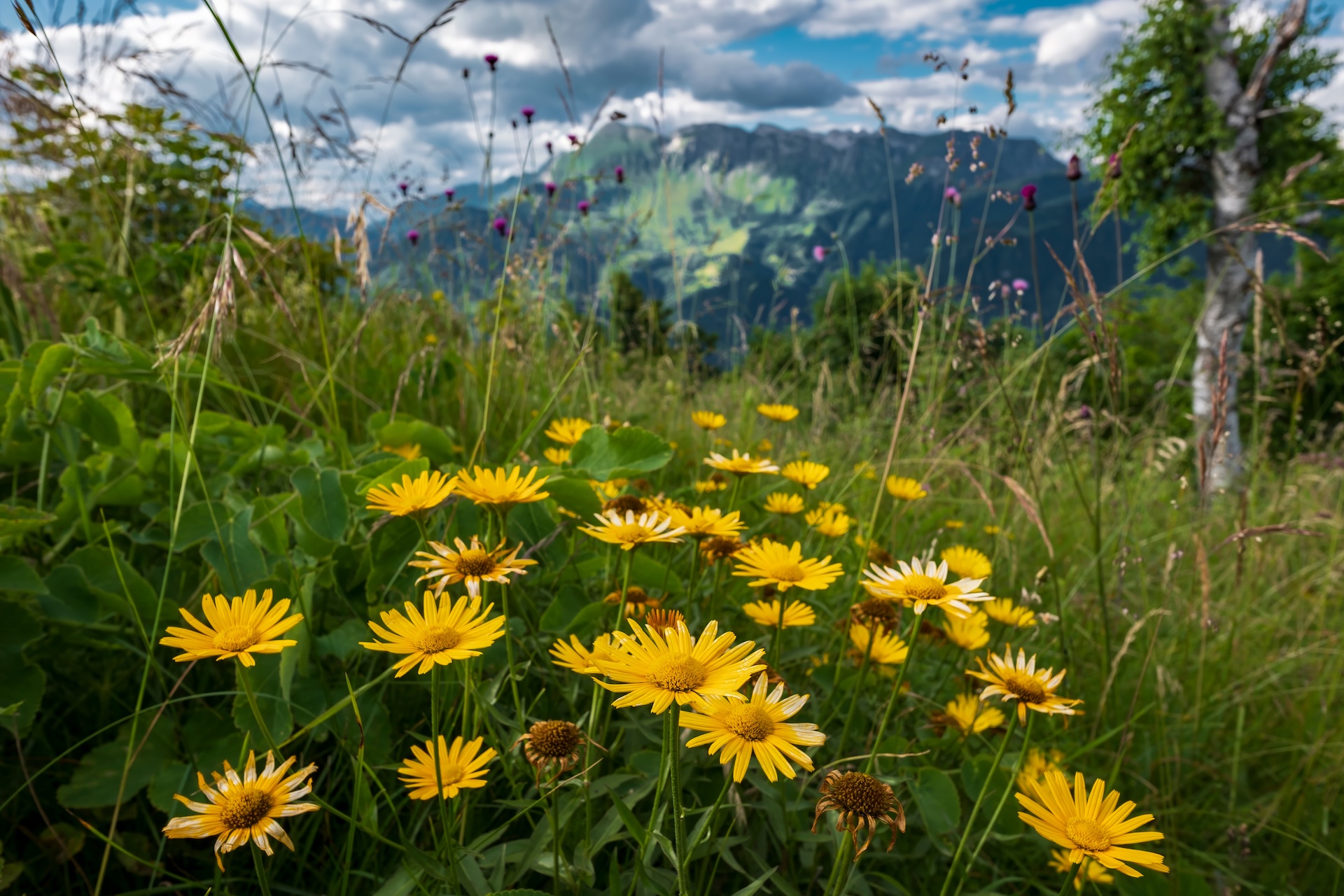
These are arguably the best months to visit if you want good weather without the crowds. May is green and fresh, with wildflowers everywhere and the waterfalls at full force from snowmelt. October brings autumn colours and quieter trails. Temperatures are pleasant for hiking (15–25°C), though the water will be cold for swimming.
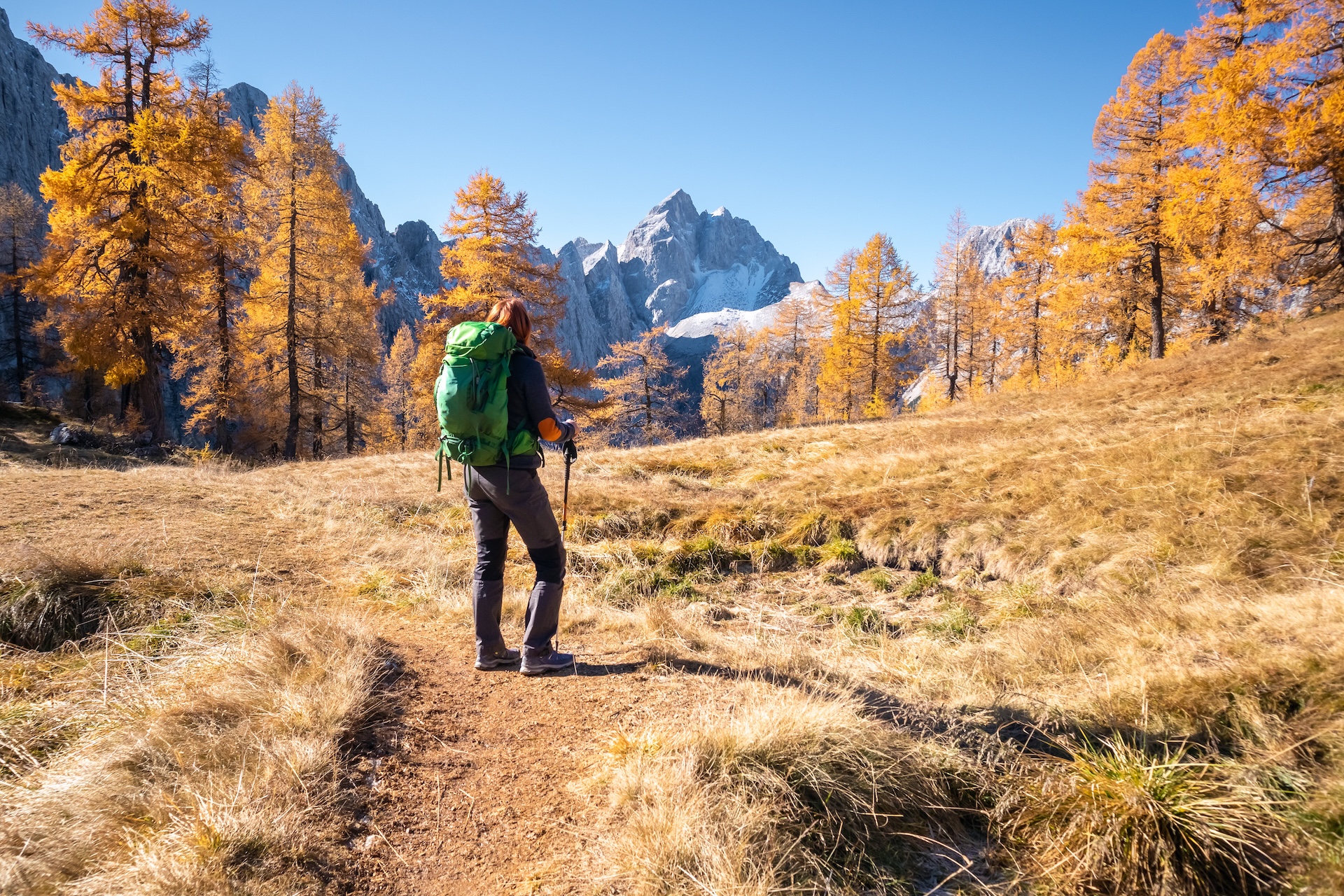
The main thing to watch: some activity providers and smaller restaurants may not be open yet in early May, or may have already closed by late October.
Spring (March – April)
Early spring is quiet in the valley. Snow still covers the higher mountains, the Vršič Pass is closed, and water levels in the river are high from snowmelt — great for watching the waterfalls at their most powerful, less ideal for water sports.
Some hiking trails at higher elevations may still be snow-covered or muddy. The valley towns are peaceful, and you'll have most sights to yourself. Accommodation prices are lower.
Winter (December – February)
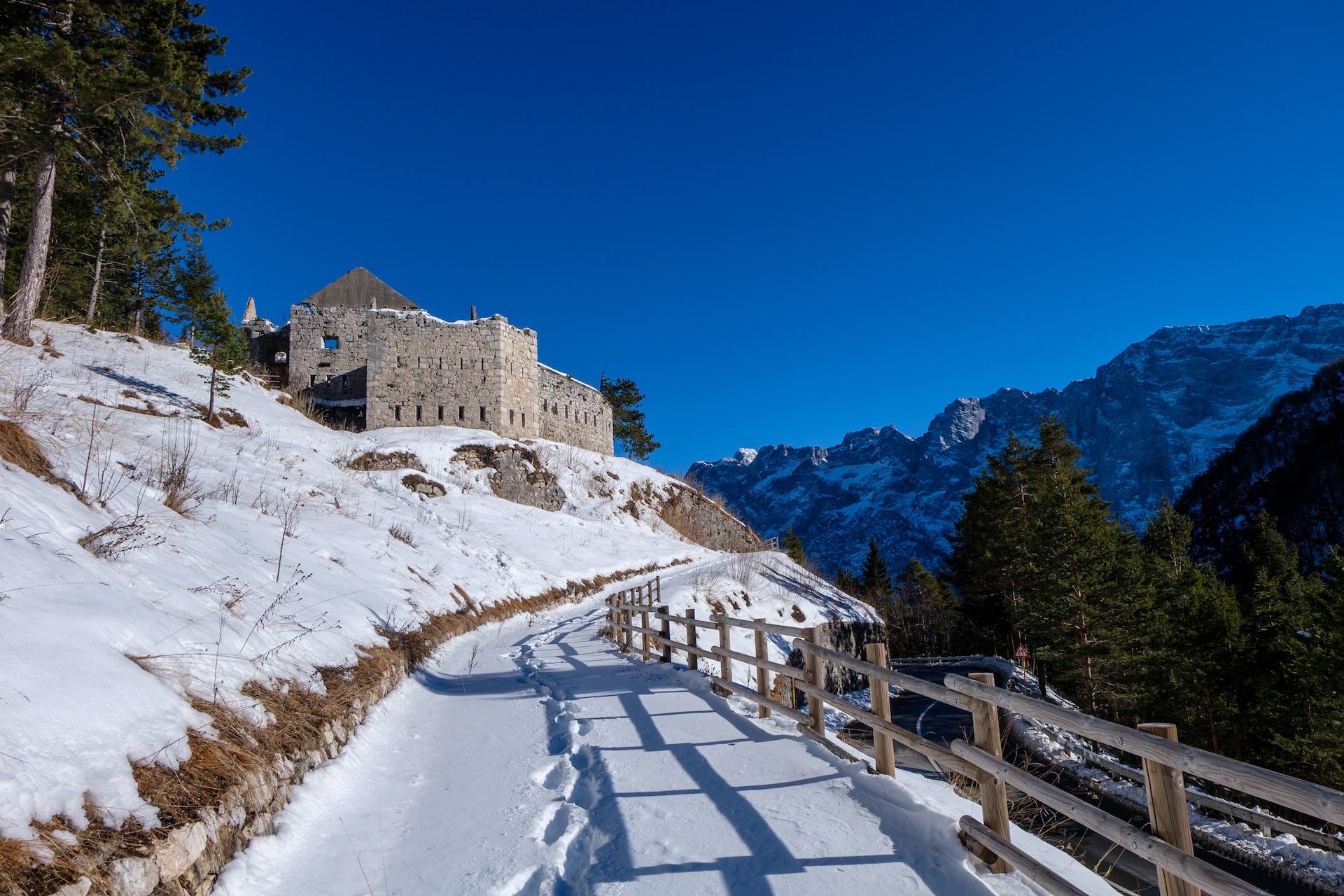
The Soča Valley in winter is a completely different experience. The upper valley gets snow, the Vršič Pass is closed, and most adventure activity providers shut down.
How Many Days Do You Need in the Soča Valley?
This depends on what kind of traveller you are, but here's an honest breakdown:
1 day — enough to drive through the valley, stop at a couple of viewpoints, and see one or two highlights. You'll get a taste, but you'll barely scratch the surface. If this is all you have, focus on the stretch between Bovec and Kobarid: the Great Soča Gorge, Napoleon's Bridge, and Kozjak Waterfall.
2 days — a solid weekend trip. You can cover the major sights, do one activity (like a rafting trip or a longer hike), and have time to enjoy a proper meal in Kobarid. It'll feel busy, but doable.
3–4 days — the sweet spot for most visitors. Enough time to explore all three main towns (Bovec, Kobarid, Tolmin), visit the waterfalls and gorges, do an activity or two, drive over the Vršič Pass, and actually relax. This is what we'd recommend for a first visit.
5–7 days — if you want to go deeper. Hike the Soča Trail from the source to Bovec. Visit the WWI sites properly. Do multiple activities. Explore the quieter lower valley around Kanal ob Soči. Take a day trip to the Goriška Brda wine region or cross into Italy.
Remember to book your stay well in advance!
Towns of the Soča Valley
The Soča Valley doesn't have one big centre — it has a string of small towns, each with its own character.
Top 3 bases for your stay:
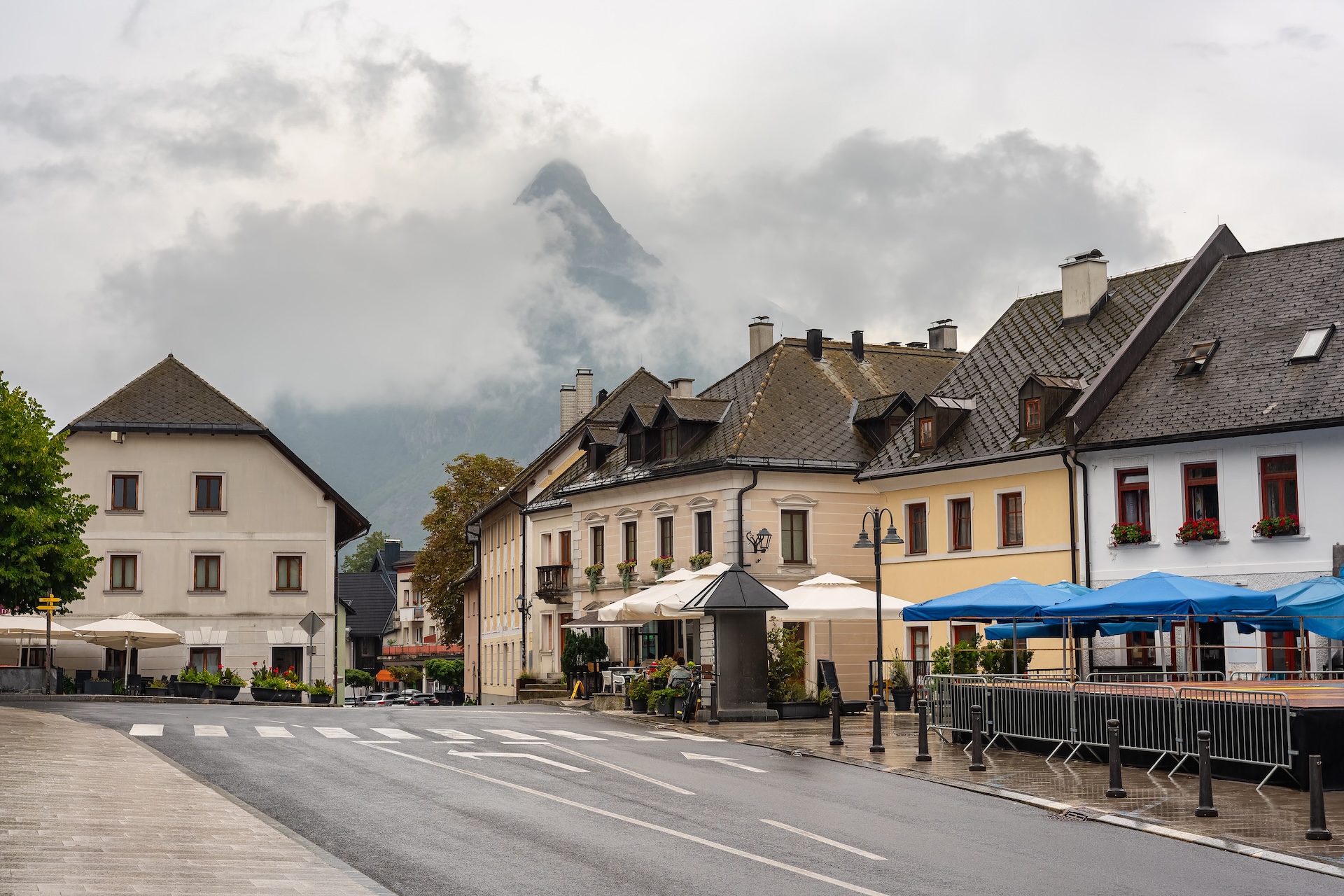
Bovec
The biggest town in the upper valley and Slovenia's adventure capital.
This is where most activity providers are based — rafting, kayaking, canyoning, paragliding, zip-lining, you name it.
Small but well set up for visitors: supermarkets, bus stops, and plenty of restaurants and accommodations right in the center of it all.
The Great Soča Gorge, Virje Waterfall, and Boka Waterfall are all within a 15-minute drive.
Best for: adventure travellers, first-time visitors, the widest range of accommodation and services.
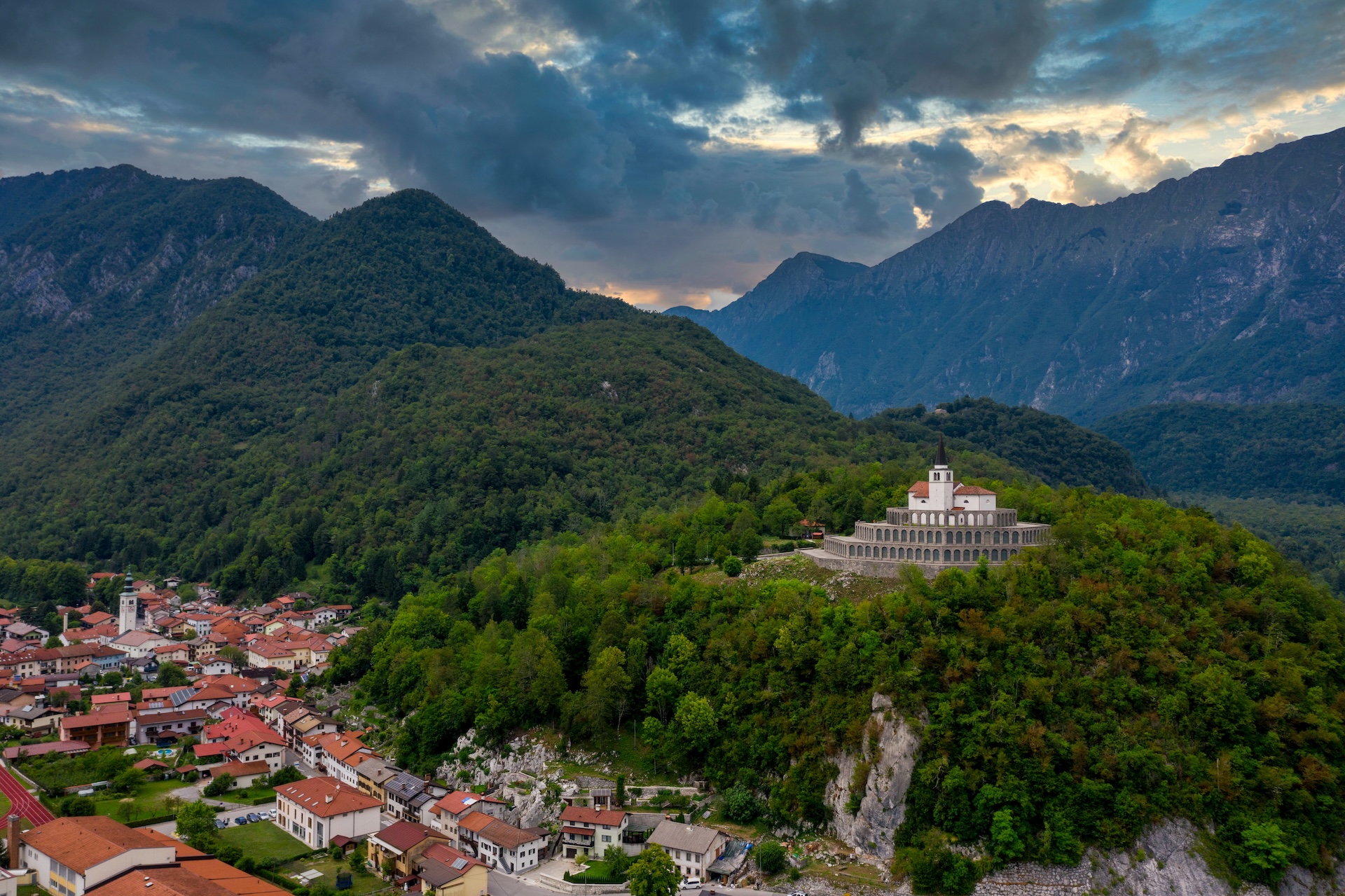
Kobarid
Smaller and quieter than Bovec, with a completely different feel. Kobarid is about history, food, and atmosphere.
The award-winning Kobarid Museum tells the story of the WWI Isonzo Front and is one of the best war museums in Europe.
The Kobarid Historical Trail loops through town past Napoleon's Bridge, the Italian Charnel House, and the stunning Kozjak Waterfall.
On the food side, Hiša Franko (three Michelin stars, World's 50 Best) is just outside town. For something more casual, try Hiša Polonka, Topli Val, or Kotlar.
Best for: foodies, history lovers, couples, anyone who prefers charm over buzz.
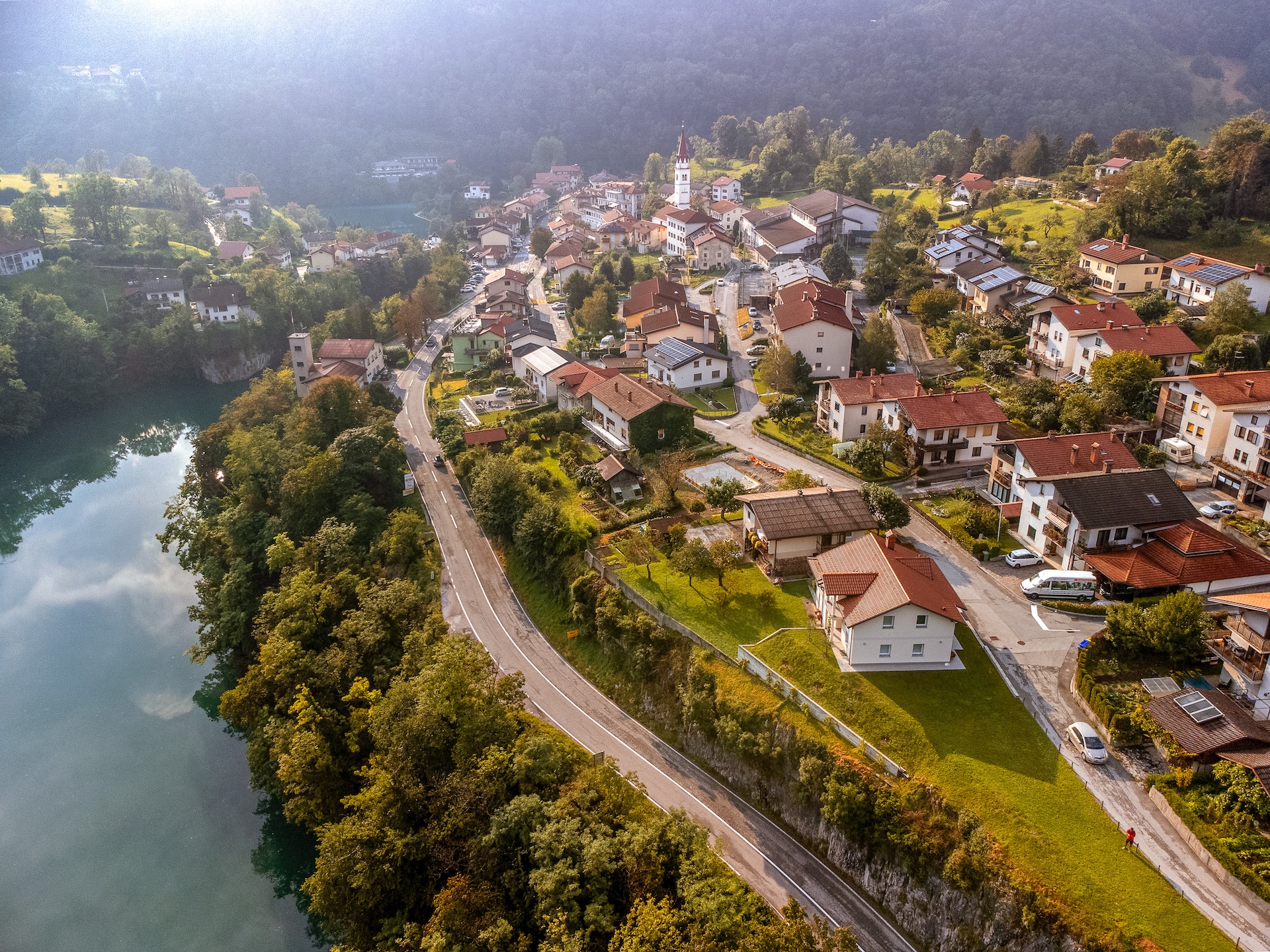
Tolmin
The administrative centre of the valley — more of a working town than a tourist hub.
The main draw is Tolmin Gorge, the lowest entry point into Triglav National Park and an easy, scenic walk along boardwalks through a narrow canyon.
Tolmin is also known for its summer music festivals: Punk Rock Holiday, Sajeta, Tolminator, and Butik Festival all take place here, mainly in August.
Best for: festival-goers, families (Tolmin Gorge is very accessible), travellers exploring the lower valley.
Must-See Places in the Soča Valley
There's a lot to see in the Soča Valley, but if your time is limited, these are the places that should be at the top of your list.
We've ordered them roughly from north to south along the valley.
Vršič Pass
The highest mountain pass in Slovenia (1,611m) and one of the most spectacular drives in the country.
On the way up, stop at the Russian Chapel — a wooden church built in 1917 as a memorial to prisoners of war who died building the road.
On the way up, stop at the Russian Chapel — a wooden church built in 1917 as a memorial to prisoners of war who died building the road.
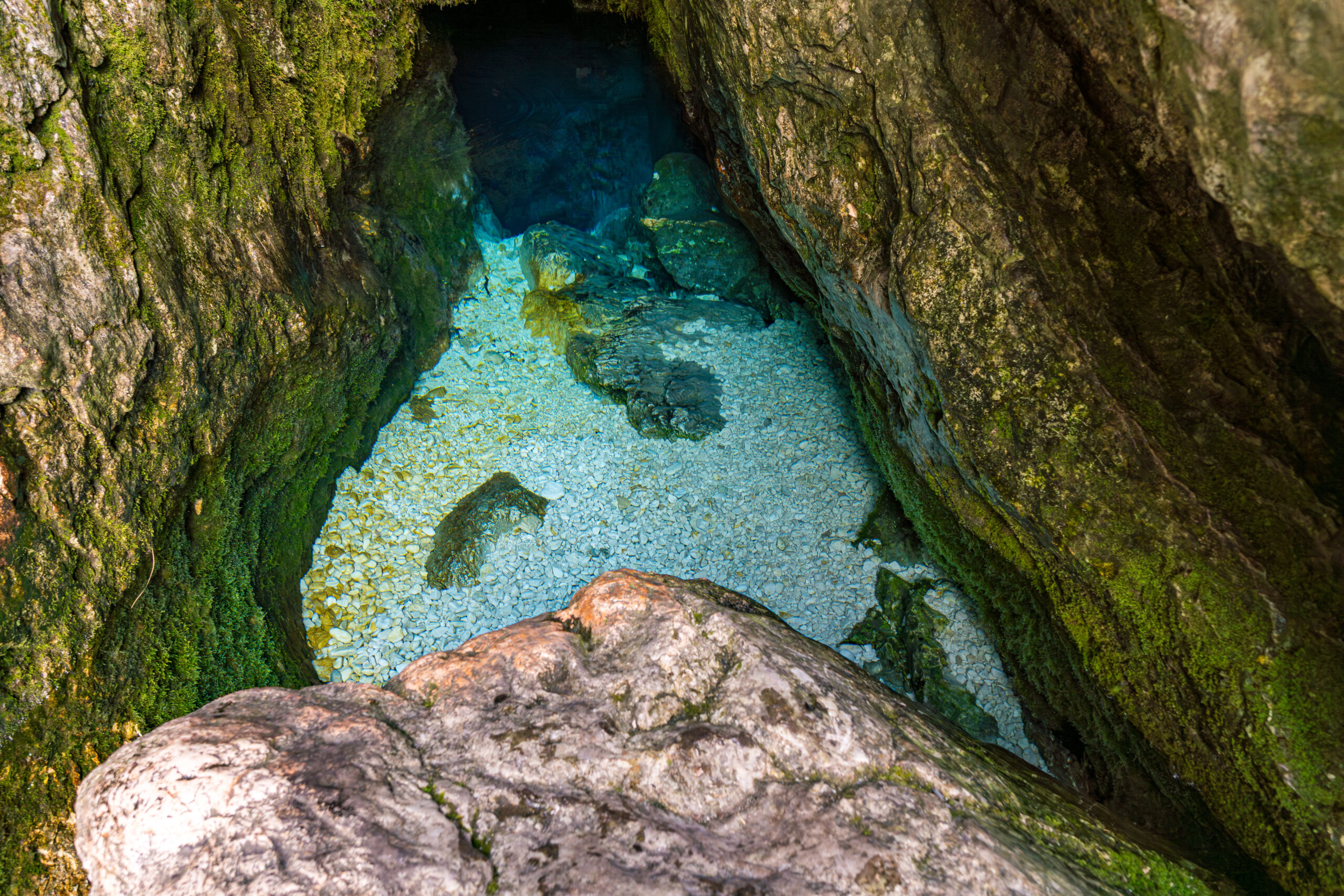
Source of the Soča River (Izvir Soče)
The Soča river begins as a spring emerging from a cave at the base of a cliff near Trenta.
A short but steep 15-minute hike with a via ferrata section (iron cables bolted into rock) gets you there. Not dangerous, but you need decent shoes.
The water at the source is an almost unreal blue-green. Worth the detour if you're in the upper valley.
A short but steep 15-minute hike with a via ferrata section (iron cables bolted into rock) gets you there. Not dangerous, but you need decent shoes.
The water at the source is an almost unreal blue-green. Worth the detour if you're in the upper valley.
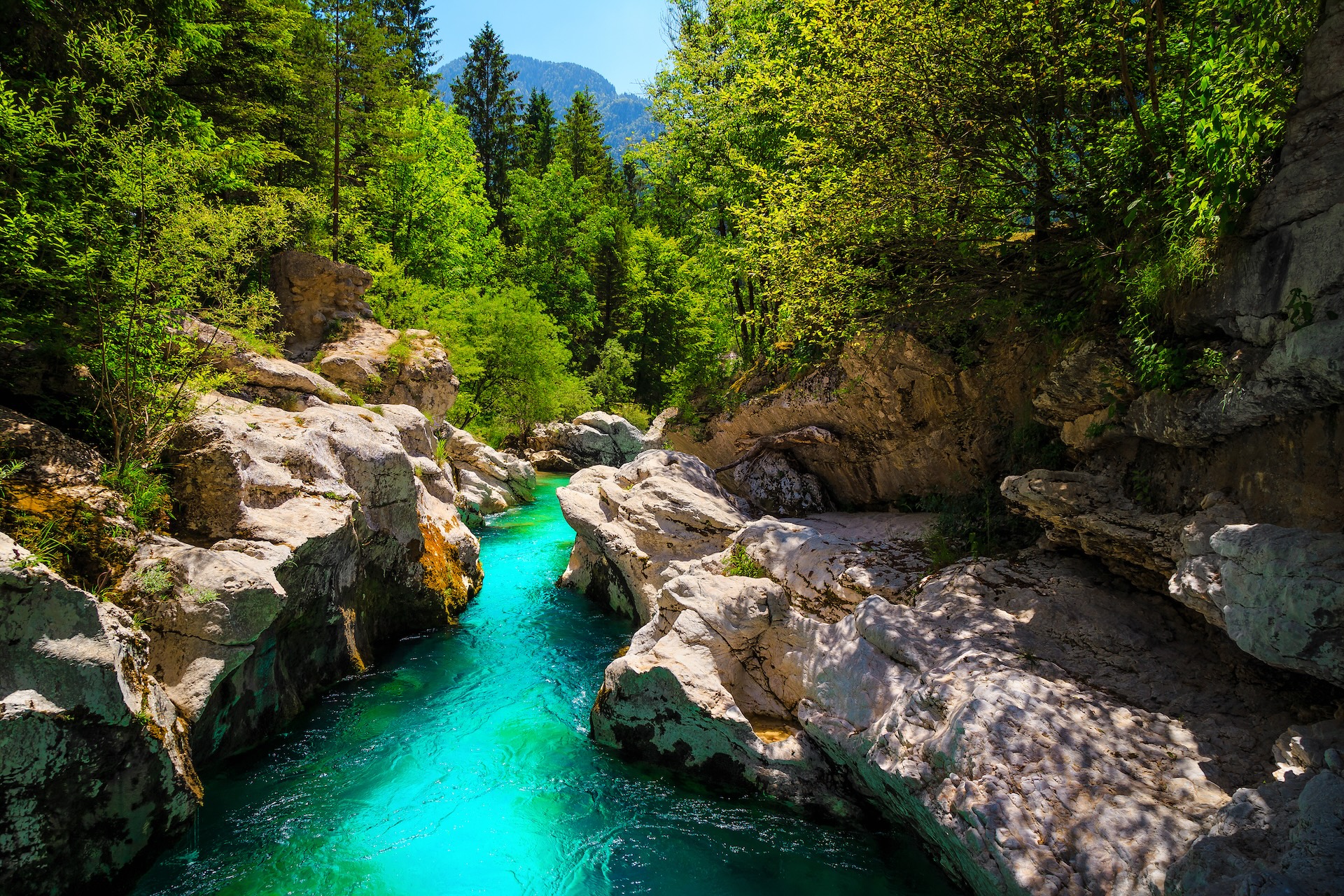
Great Soča Gorge (Velika Korita Soče)
The single most impressive stretch of the Soča River. A 750-metre slot canyon between Bovec and Trenta where the river squeezes through narrow rock walls into deep emerald pools. Bridges cross the gorge and dozens of small paths lead to viewpoints along the rim.
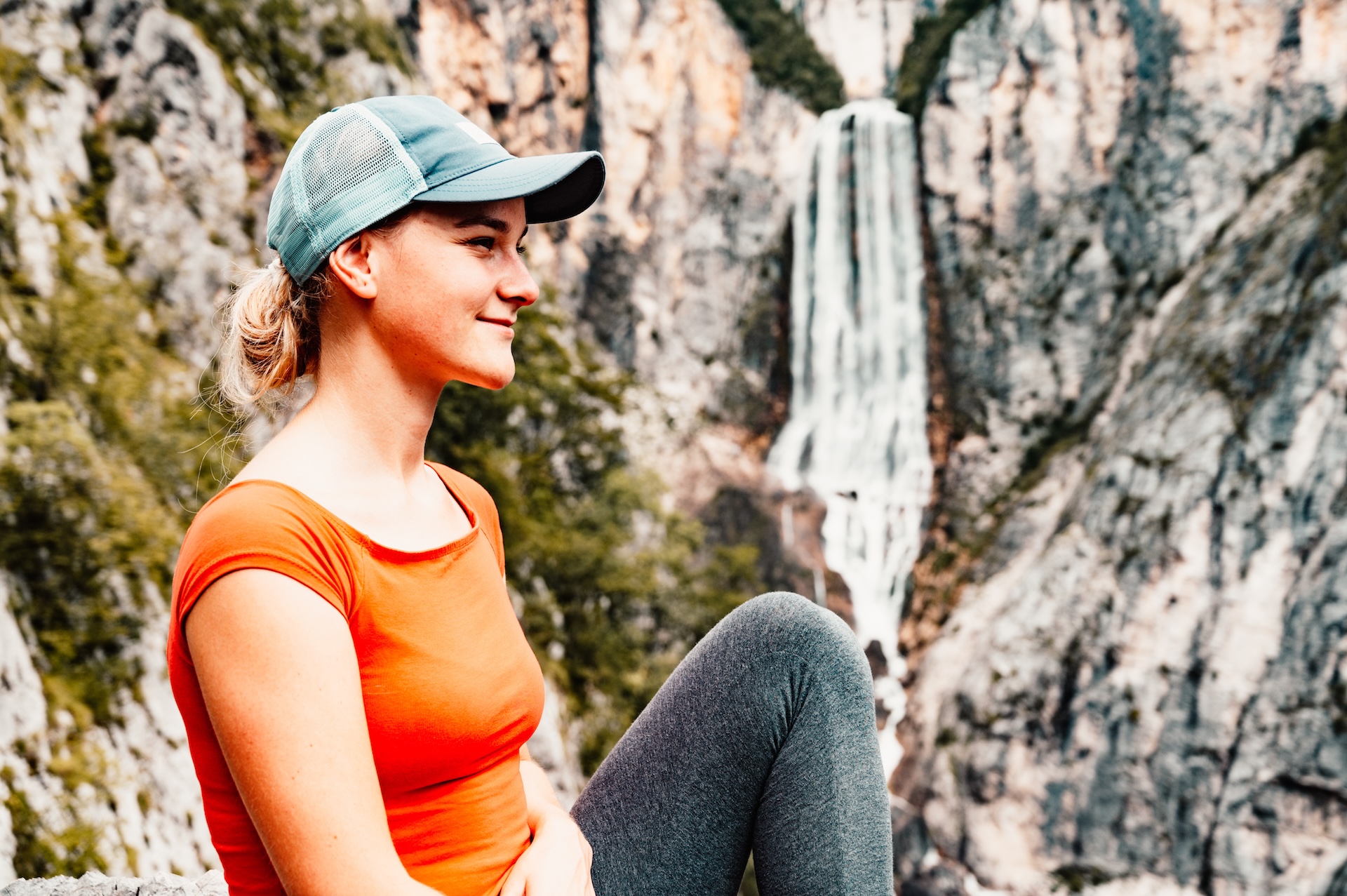
Boka Waterfall (Slap Boka)
Slovenia's highest and most powerful waterfall — 144 metres high, dropping in two stages from a cliff face between Bovec and Žaga.
Visible from the road, but worth the 15-minute hike to the viewpoint for a closer look.
Visible from the road, but worth the 15-minute hike to the viewpoint for a closer look.
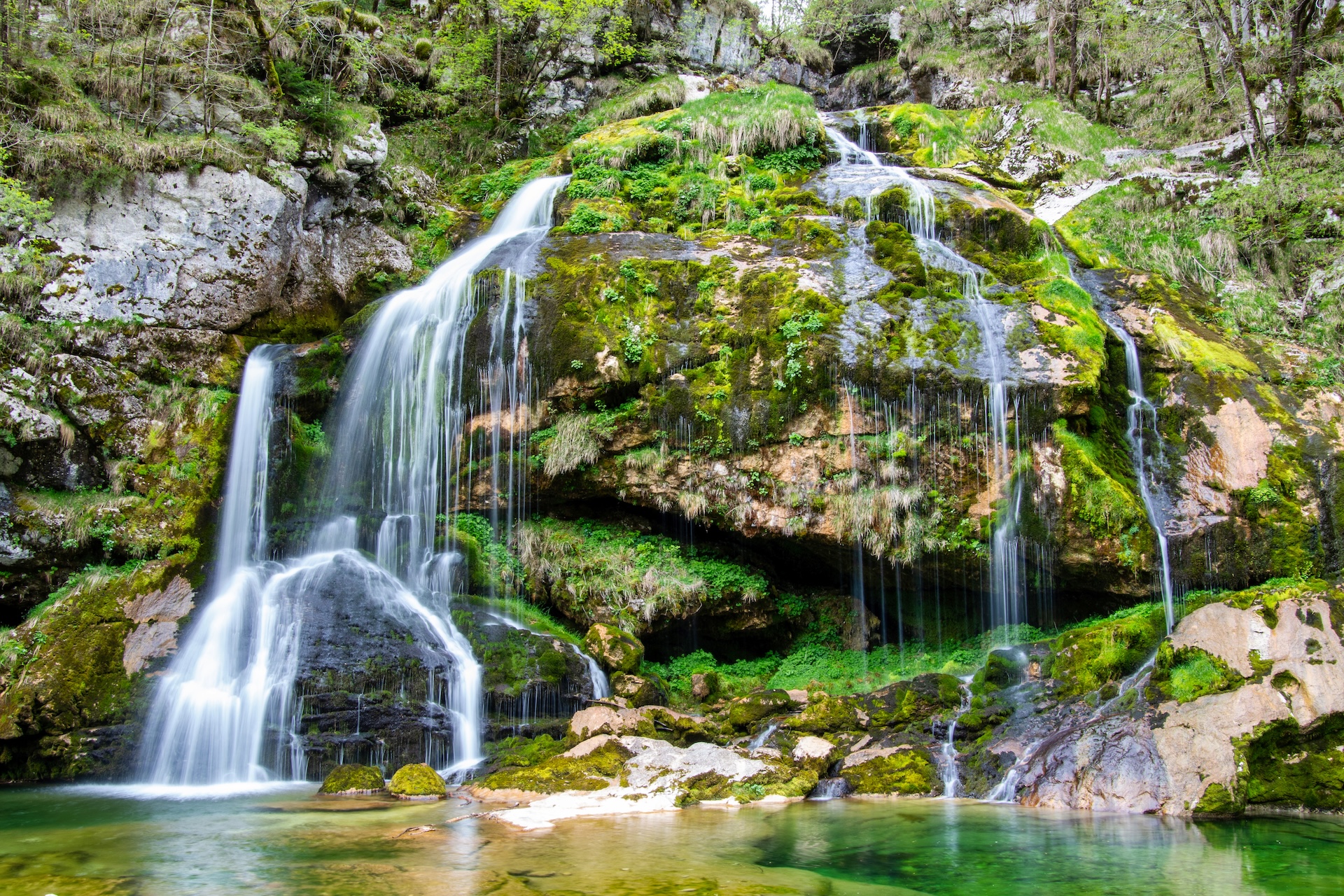
Virje Waterfall (Slap Virje)
A 12-metre waterfall with a fairy-tale setting — mossy rocks, lush greenery, and a beautiful pool at the base.
There's an apx. an hour walk to the waterfall from Bovec, or a 5-minute drive (there's a 5€ parking fee).
Virje waterfall is considered to be one of the most photographed spots in the valley. When you see it, you'll know why.
There's an apx. an hour walk to the waterfall from Bovec, or a 5-minute drive (there's a 5€ parking fee).
Virje waterfall is considered to be one of the most photographed spots in the valley. When you see it, you'll know why.
Mangart Road
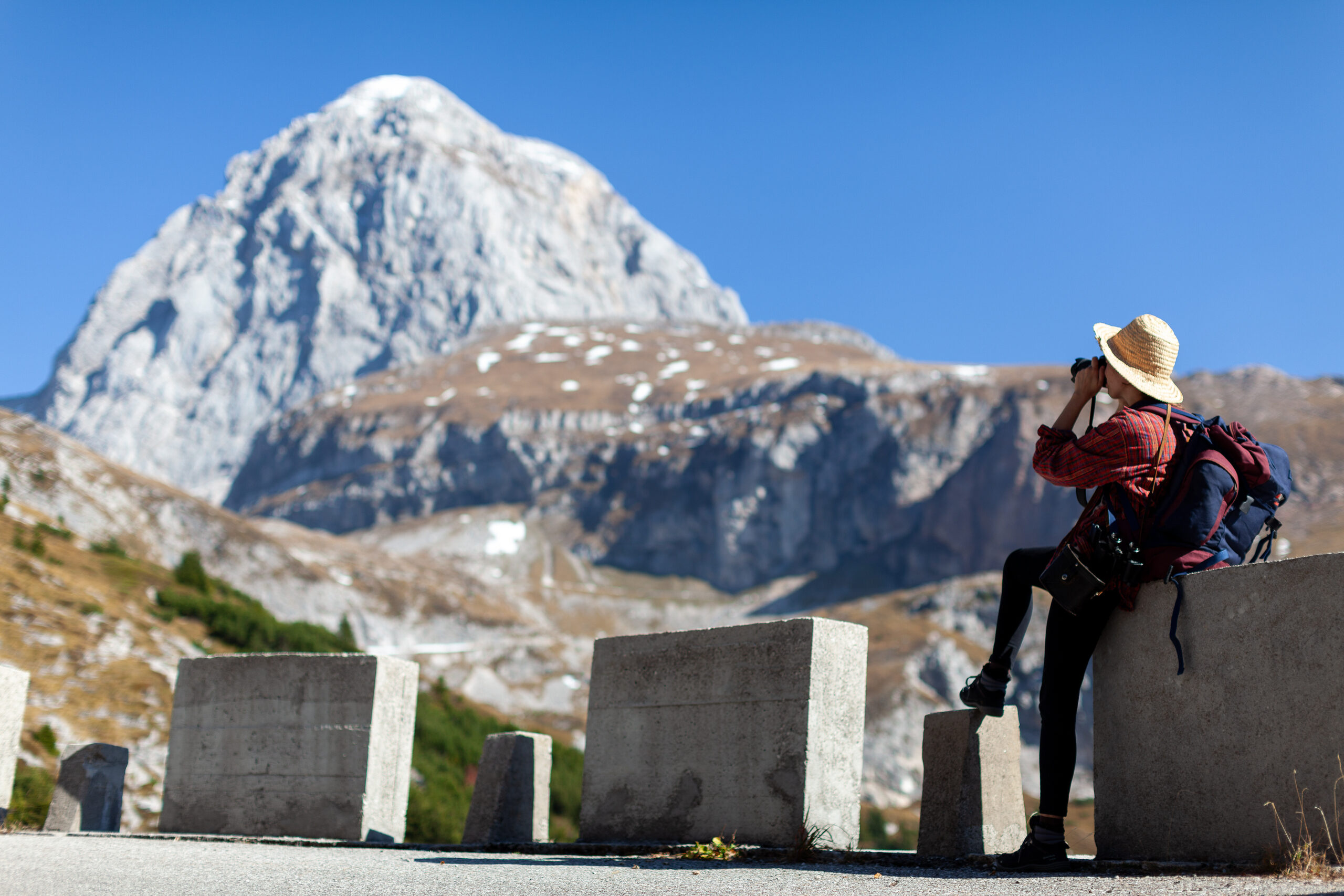
The highest road in Slovenia, climbing 12 kilometres from the Predil Pass to the Mangart Saddle at 2,055 metres.
But the views from the top are extraordinary, stretching into Italy and across the Julian Alps. Mountain hut at the top (open in summer).
But the views from the top are extraordinary, stretching into Italy and across the Julian Alps. Mountain hut at the top (open in summer).
Kluže Fort
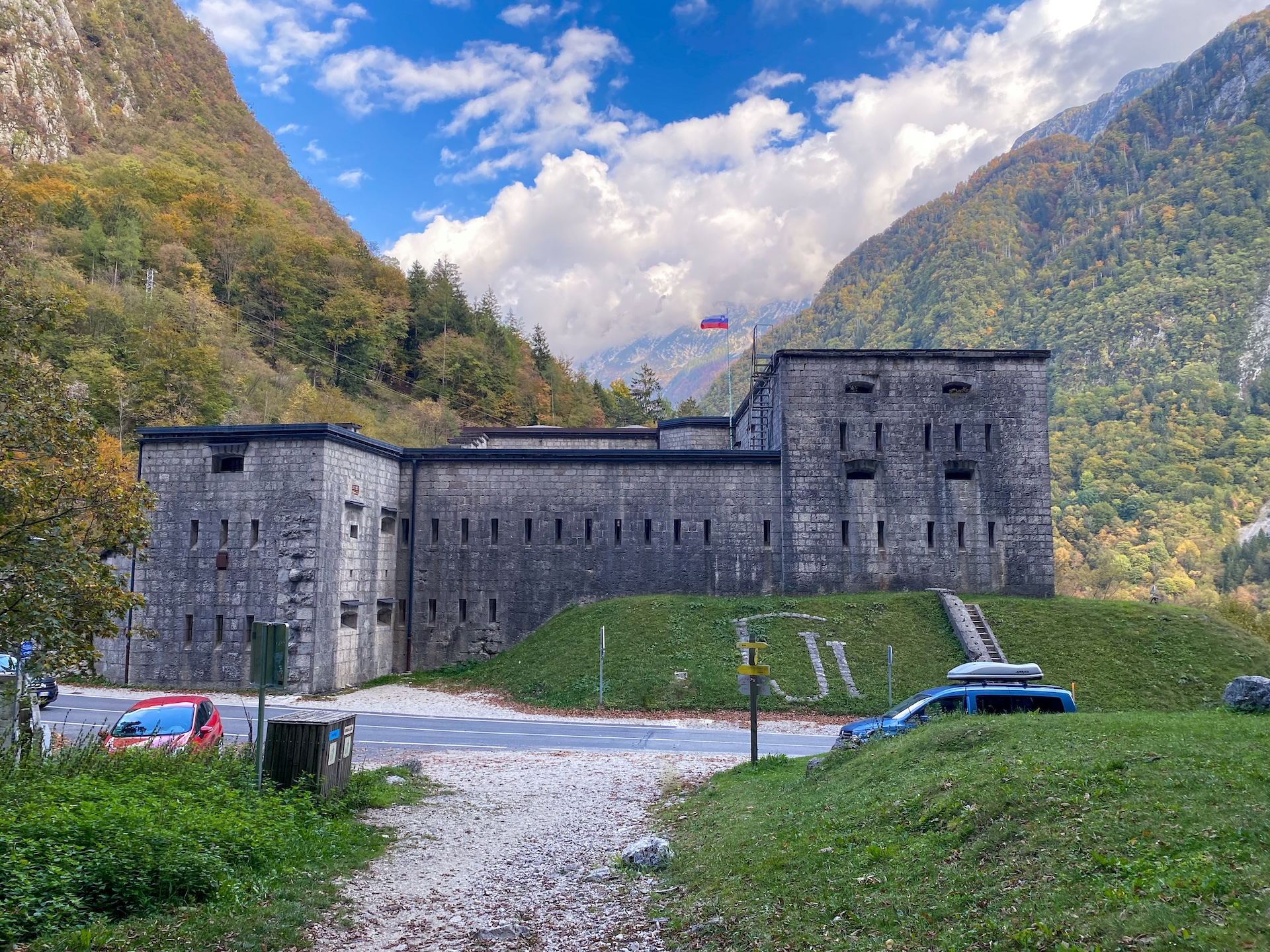
A fortress built into the rock face above a 70-metre-deep gorge on the Koritnica River, just north of Bovec. Originally built to defend against Ottoman invasions, later used by Napoleon's forces and during WWI. Now a small museum with a dramatic setting.
Ther
Admission fee: 5€
Ther
Admission fee: 5€
Napoleon's Bridge (Kobarid)
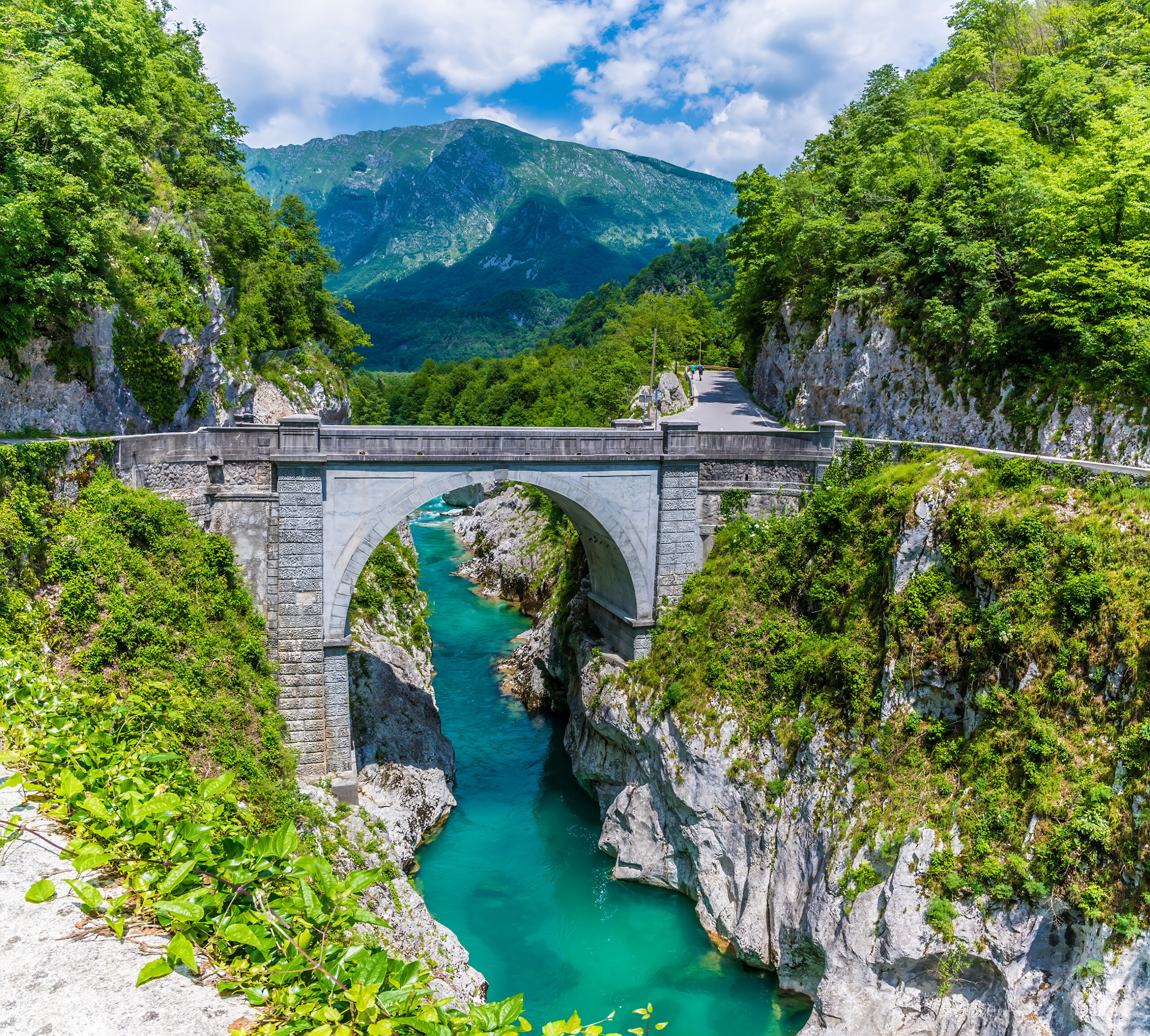
A single-arch stone bridge over the Soča just outside Kobarid. Named after Napoleon's troops who once marched through here. Beautiful photo spot, especially in morning light, and the starting point for the walk to Kozjak Waterfall.
Kozjak Waterfall (Slap Kozjak)
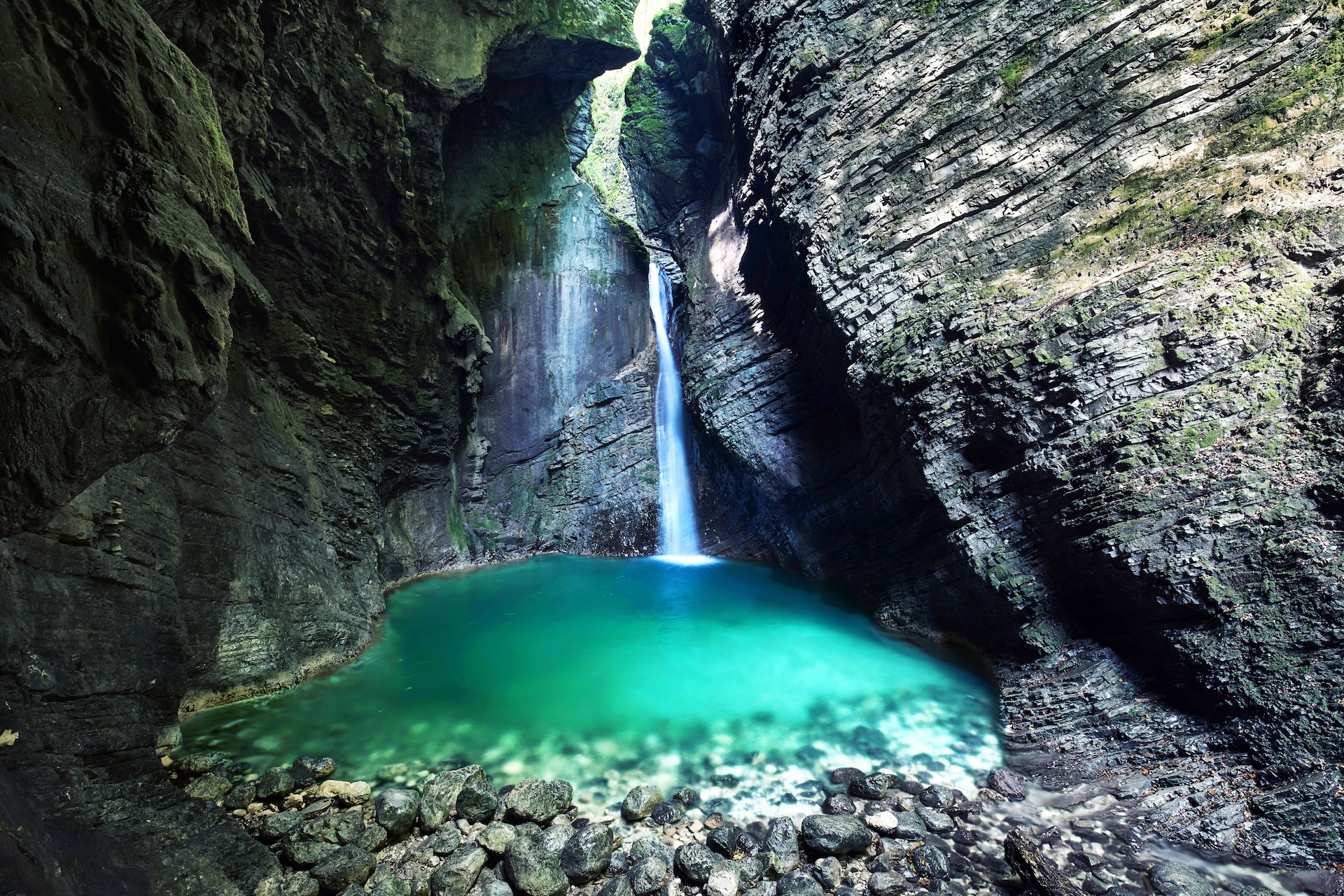
A 15-metre waterfall hidden inside a natural stone amphitheatre — water drops into a green pool surrounded by curving rock walls. The 30-minute forest walk to reach it is part of the experience. One of the most beautiful waterfalls in Slovenia.
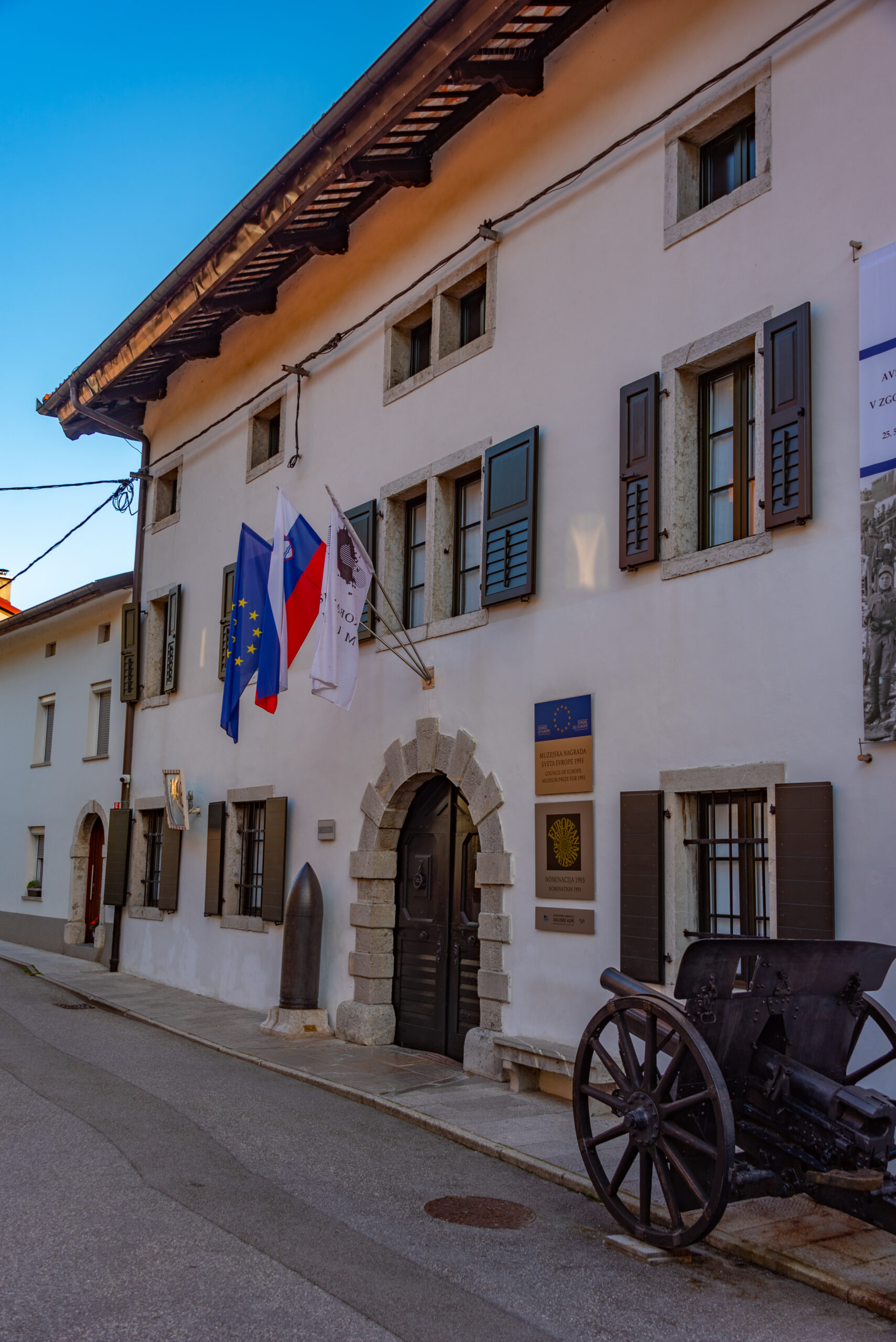
Kobarid Museum
One of the best war museums in Europe. Tells the story of the Isonzo Front — the WWI battles fought along the Soča River between 1915 and 1917 — through photographs, artefacts, and personal accounts. Won the Council of Europe Museum Prize.
There's an 8€ admission fee.
You can check the opening hours and tickets here.
There's an 8€ admission fee.
You can check the opening hours and tickets here.
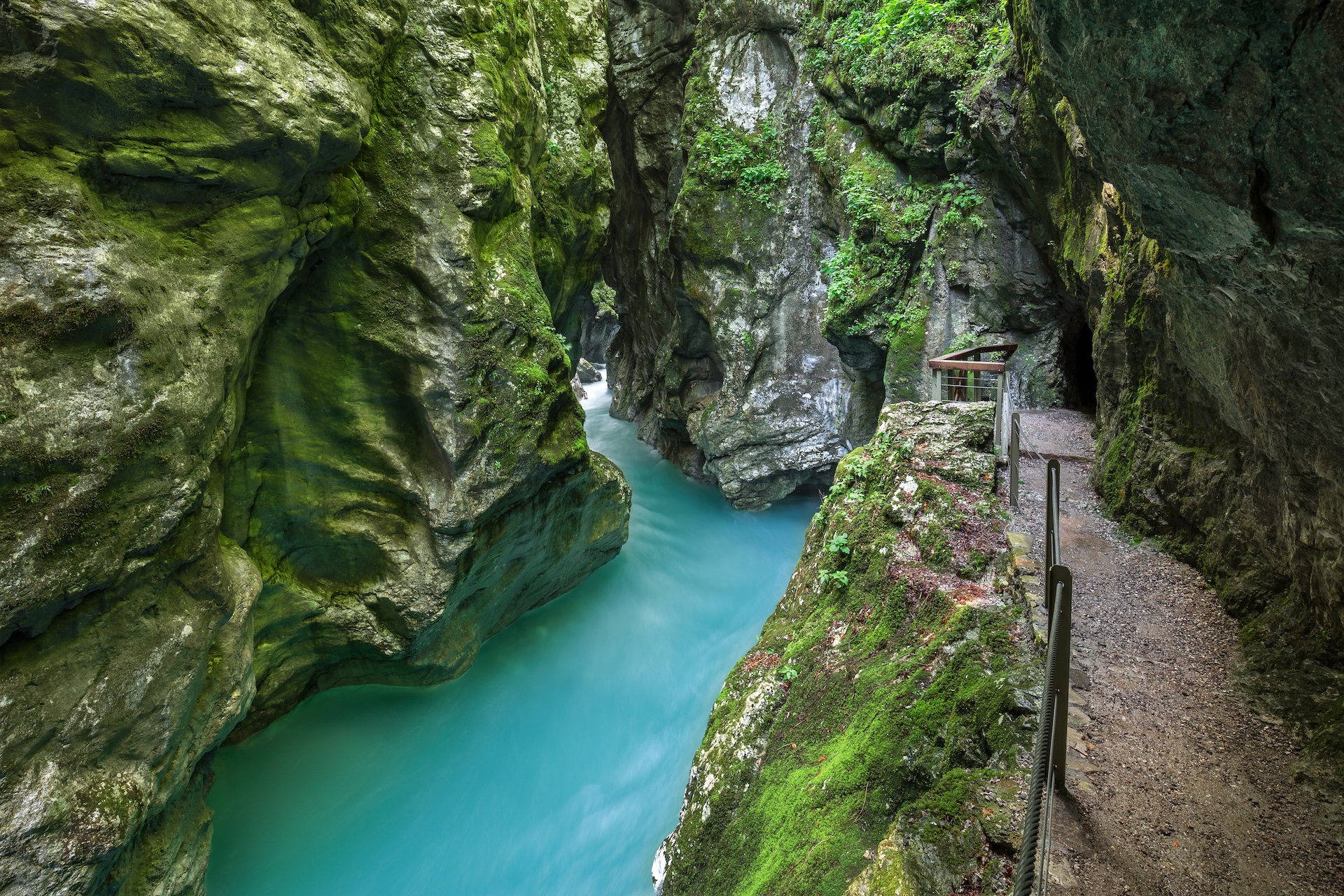
Tolmin Gorge (Tolminska Korita)
The lowest entry point into Triglav National Park. An easy circular walk on boardwalks and paths through a narrow canyon where the Tolminka and Zadlašica rivers meet. Look for the "Bear's Head" rock formation and the natural thermal spring.
The tickets cost 8€.
For more info check here.
The tickets cost 8€.
For more info check here.
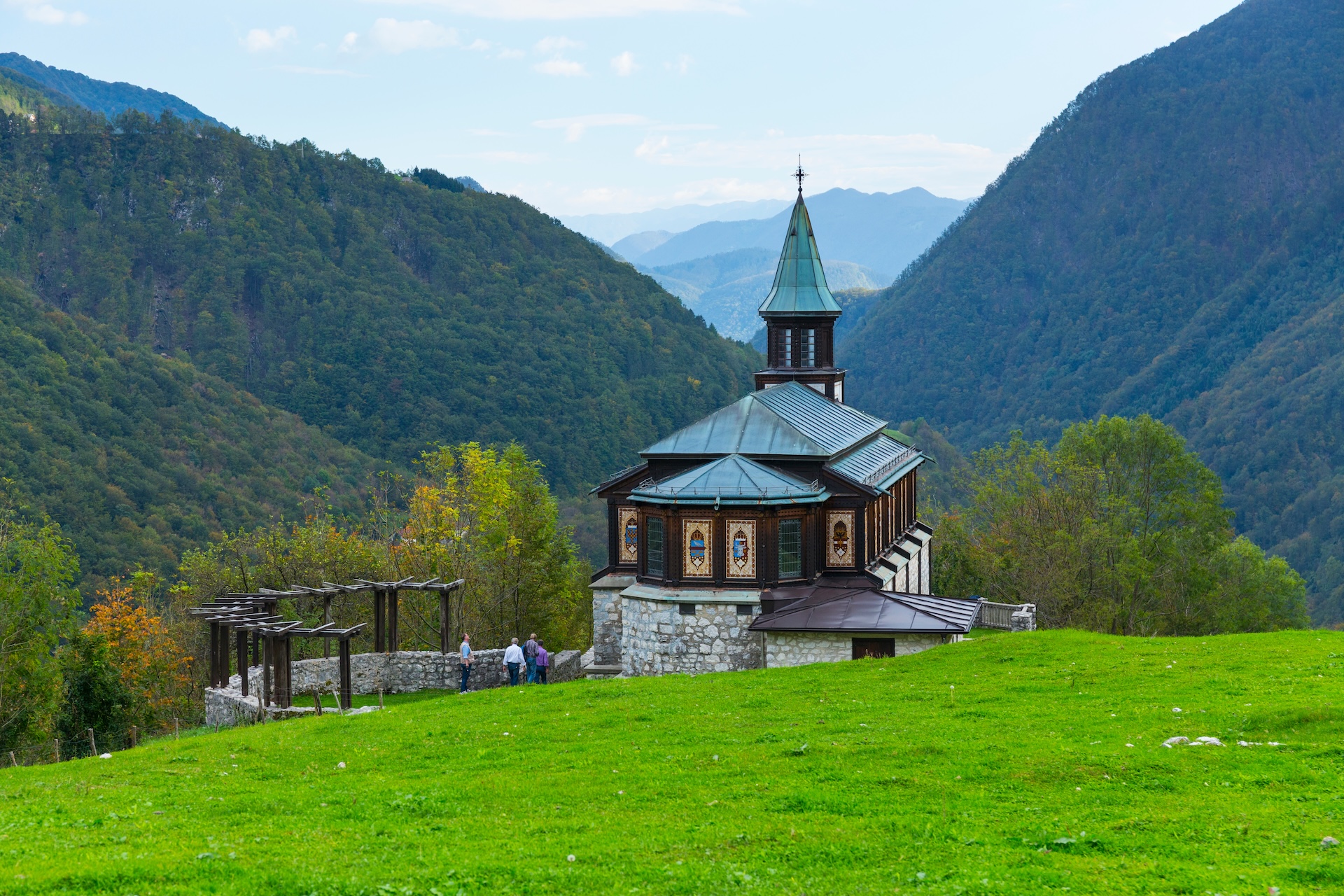
Javorca Memorial Church
A wooden church hidden in the forest above Tolmin, built by Austro-Hungarian soldiers in 1916 during the Isonzo Front. It holds the European Cultural Heritage label and is one of the most quietly powerful spots in the valley.
Kanal ob Soči Bridge
A single-arch stone bridge over the Soča in the town of Kanal — one of the most photographed scenes in the valley. Colourful houses line the riverbank on both sides. Best photographed from the "Kanal Bridge Viewpoint" on the opposite bank. Few tourists make it this far down the valley, which makes it a nice, uncrowded stop.
Where to Stay in the Soča Valley
No big resorts or international chains here — accommodation in the Soča Valley is locally-owned, reasonably priced, and almost always comes with free parking.
Most visitors base themselves in Bovec (biggest selection, closest to activities).
Hotels
A handful of small hotels and boutique properties across the valley, mostly in Bovec and Kobarid. They're charming but limited in number — book early for summer.
Apartments
Apartments are hands down the smartest choice here.
More space than hotels, better value, and a kitchen for those evenings when you don't feel like hunting for a restaurant. Most come with parking, a balcony, and mountain views. The biggest selection is around Bovec, with good options in Kobarid and Tolmin too.
Check the exact location before booking — many apartments sit in villages outside the main towns, which is fine with a car but worth knowing.
In July and August, the best places book out months ahead.
Our pick: Apartment Irena, right in the centre of Bovec. Newly renovated, well-equipped, and ideal for families and smaller groups.
Camping
Dozens of campsites line the river between Bovec and Kobarid — riverside pitches, mountain views, and cool summer nights. Most sites are open April to October. Tourist tax is charged separately on arrival.
Start Planning Your Soča Valley Trip
The Soča Valley is one of those rare places that delivers on every front — stunning scenery, genuine adventure, incredible food, and a pace of life that makes you wonder why you waited so long to visit.
Our advice? Don't overthink it.
Best way to start is to pick a base first, then start planning the activities around it. If you need a comfy place to stay right in the heart of it all, get in touch and we'll sort it out.